Turkey Minister: Disagreement Over One Phrase Blocked Climate Agreement
Turkey’s Minister of Environment, Urbanization and Climate Change, Murat Kurum, stated that the European Union’s insistence on including a specific phrase about fossil fuels in the final text of the 31st Conference of the Parties to the United Nations Framework Convention on Climate Change (COP31) prevented a final agreement and overshadowed the summit’s achievements.
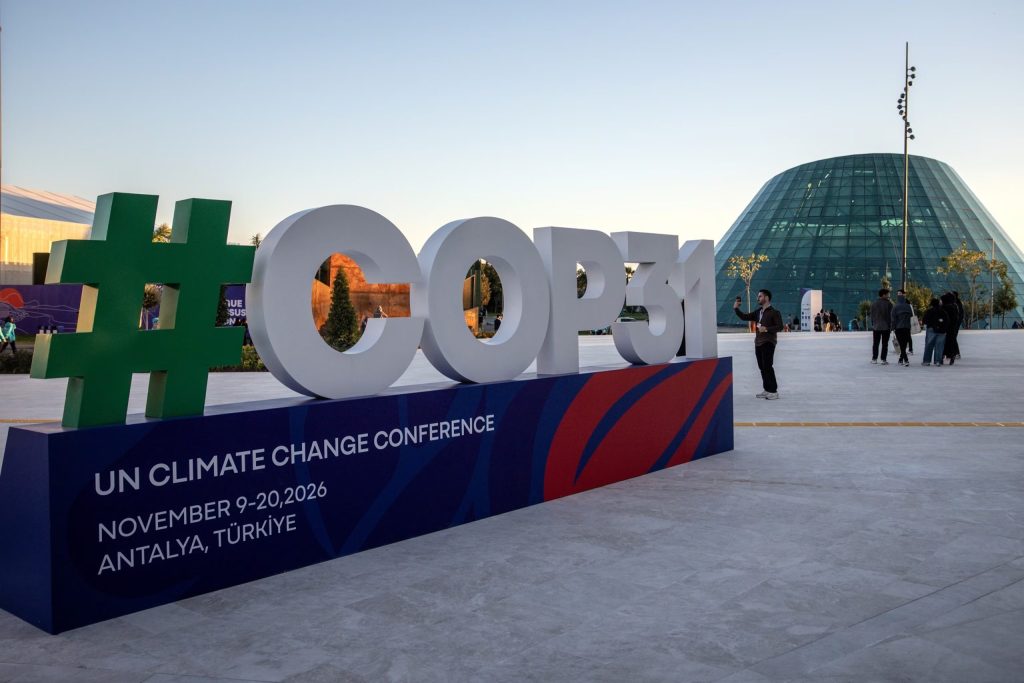
Speaking to reporters after the Turkish cabinet meeting and assessing the COP31 process in Antalya, Kurum said the summit was held with the participation of representatives from 196 countries, 102 leaders, more than 300 ministers, and more than one million visitors, making it one of the largest events in the history of the conference.
Criticizing the European Union’s approach in the negotiations, Kurum said some parties made it difficult to reach an agreement by insisting on their own interests and demands. According to him, the European Union insisted on its position regarding moving away from fossil fuels without paying sufficient attention to the views and needs of other countries and demanded that its desired phrase be included in the final text.
Turkey’s environment minister stressed: “We are not a tribal country; we have national interests and clear positions, and we do not bow to the imposition of others’ demands. We do not act to please others, and we cannot ignore the countries that pay the main cost of the climate crisis for the sake of some countries’ interests.”
Referring to Turkey’s approach during its presidency of the summit, Kurum added that the country tried to prepare the ground for a common agreement by listening to the views of different countries and holding meetings with negotiating groups. According to him, even countries that had previously not been able to come together gathered during these negotiations, and a basis for dialogue was created among them.
Stating that Turkey conducted the summit presidency with transparency, Kurum emphasized that the country’s representatives listened to the words of 196 countries and took their expectations into account in the negotiations.
Kurum continued: “We tried to reach a point of agreement, and this approach was appreciated by many countries. However, some parties created a dispute over one phrase and imposed their demands on the negotiation process. The European Union also insisted on including its desired phrase in the final text on the issue of moving away from fossil fuels.”
Turkey’s environment minister emphasized the need to consider the interests of all countries present at the summit and stated that in international negotiations, the interests of only one specific group cannot be made the basis.
He added: “We included a previously adopted decision in the text once again, but this step was not enough for the other side either. They were practically seeking to prevent the approval of this decision. While important decisions were included in the text and there was a serious will to implement them, insisting that only one side’s demand be implemented is not the right approach.”
Kurum also noted that bringing 196 countries together to adopt a common decision, especially under the current complex political conditions in the world, is not an easy task, and international developments directly and indirectly affect the climate negotiation process.
Dispute With the Executive Secretary of the Climate Change Convention
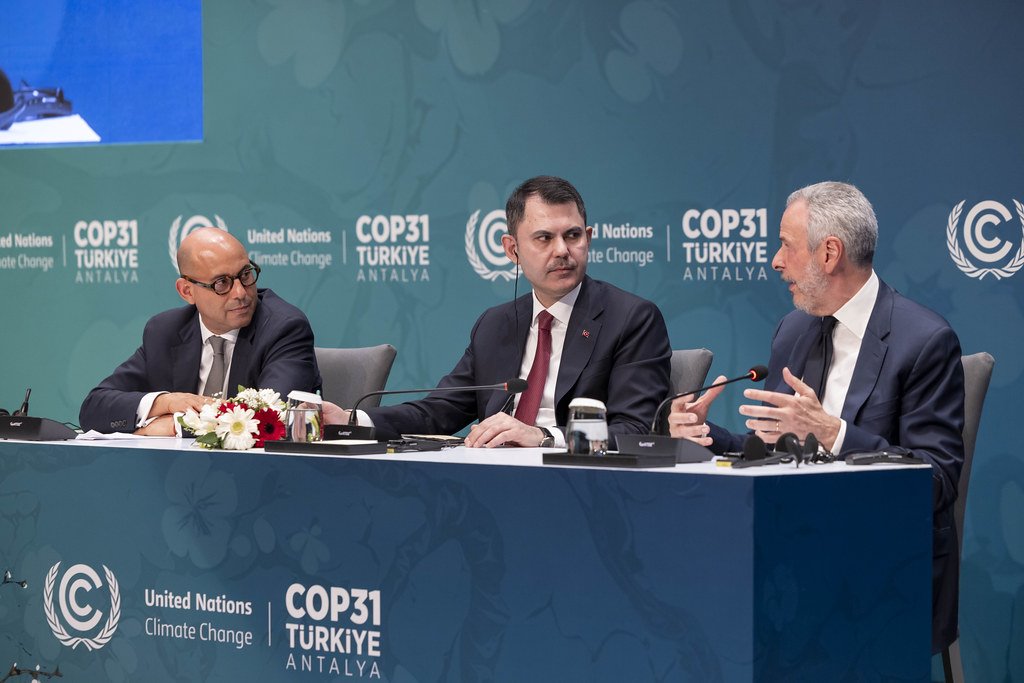
In another part of his remarks, Turkey’s environment minister addressed the dispute that arose with Simon Stiell, Executive Secretary of the United Nations Framework Convention on Climate Change (UNFCCC), saying that despite his personal respect for him, Turkey’s presidency of the summit must make decisions based on its own independent will.
Kurum stated that Stiell tried to intervene in the decision-making process during the negotiations and added that in response to this action, he asked him to leave the venue.
Explanation About the Interruption of the Ghana Environment Minister’s Speech
Kurum also explained, in response to a question about the interruption of the speech of Zantor Agyeman-Rawlings, Ghana’s Minister of Environment, Science and Technology, at one of the summit meetings, that the incident was caused by an administrative mistake.
He said some groups were trying to push the negotiation process toward failure, and the summit presidency had made arrangements to prevent these actions so that countries’ requests to speak would be raised after moving to the consideration of the relevant items.
According to Kurum, during the implementation of this mechanism, the Ghanaian minister’s speech was mistakenly interrupted. He added that after learning of the incident and understanding that it had upset the Ghanaian minister, they spoke with the Ghanaian side and took action to resolve the misunderstanding.
Thanks to Participating Countries and Description of the Summit’s Achievements
Turkey’s environment minister further thanked Arab countries, Paraguay, Venezuela and Russia for their sense of responsibility and efforts to advance the negotiations.
Kurum also referred to some achievements raised during COP31, including progress toward the 35 percent electrification target, tripling the financial resources allocated to climate change adaptation, developing carbon capture technologies in line with the goal of limiting global temperature rise to 1.5 degrees Celsius, and reducing methane emissions.
Kurum also announced the signing of agreements worth more than 26 billion dollars on the sidelines of the summit and thanked Turkey’s President Recep Tayyip Erdogan, Emine Erdogan and the people of Antalya for their support and cooperation in holding the event.
Finally, expressing regret that the negotiations failed to reach a final agreement, Kurum said the disagreement over a phrase related to fossil fuels overshadowed the important achievements of the negotiations.
Kurum concluded: “In the end, who lost? The world and humanity. This was truly regrettable.”