Qatar and Turkey sign five defense focused agreements
Qatar and Turkey, in a joint statement, while welcoming the signing of a mutual defense agreement aimed at strengthening collective security and achieving regional stability, emphasized the importance of the understandings reached within the framework of the memorandum of understanding between Tehran and Washington.
In the joint statement of Turkey and Qatar, it is stated that the US-Iran dispute and its broader regional consequences must be resolved through diplomacy.
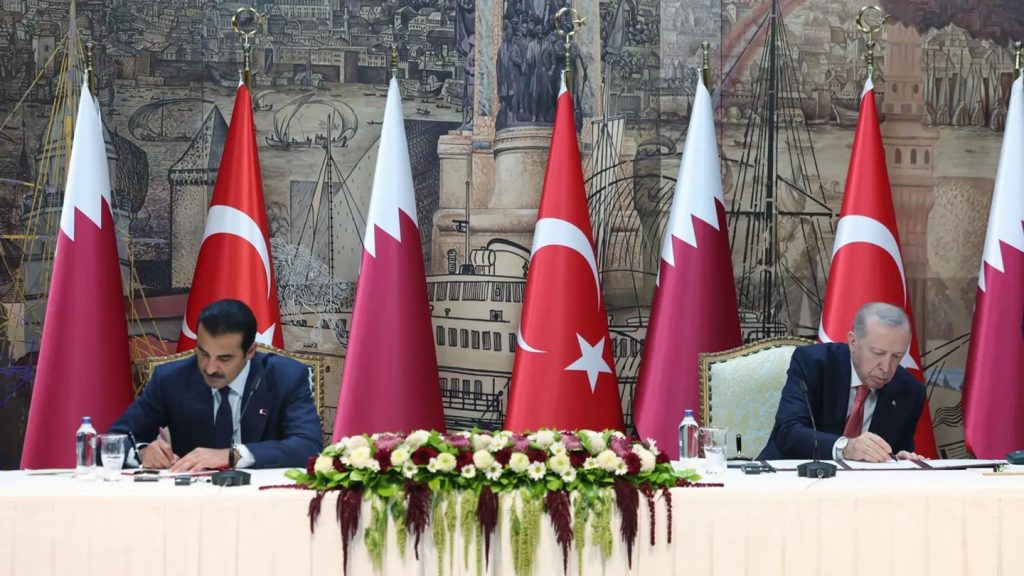
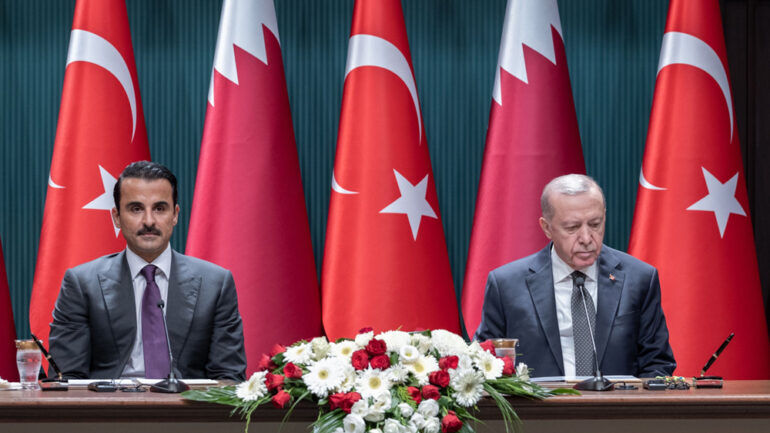
After the bilateral meeting of Recep Tayyip Erdogan, President of Turkey, and Sheikh Tamim bin Hamad Al Thani, Emir of Qatar, as well as the delegations of the two countries at the Presidency Office in Dolmabahce, Istanbul, a ceremony for signing cooperation agreements was held. At this ceremony, in the presence of the President of Turkey and the Emir of Qatar, five cooperation agreements in the fields of trade, education, diplomacy, and defense industries were signed between officials of the two sides.
Doha and Ankara announced in this joint statement that they are determined to address mutual security challenges as a strategic priority and to expand their cooperation on defense issues. Furthermore, while welcoming the signing of the mutual defense agreement aimed at strengthening collective defense and achieving security and stability, it was stated that this agreement was signed with the aim of adopting a unified position against any foreign armed attack against either of the two signatory parties and reflects the two countries’ shared view to participate in creating a safer and more stable order in the region.
Qatar and Turkey also announced that they have consulted on strengthening cooperation through holding military exercises and cooperation in the defense industries sector. The two sides, praising the signing of the memorandum of understanding among Qatar, Turkey, Pakistan, and Indonesia as a step toward meeting defense needs, noted that this memorandum of understanding provides the ground for closer cooperation in the fields of production and strengthening defense industry infrastructure.
In another part of this statement, the two countries emphasized their will to increase educational cooperation in the fields of law enforcement and security and expressed concern over the increase in attacks, violence, and threats against aid workers and humanitarian activists.
Doha and Ankara also emphasized the need to preserve the security and stability of all countries in the region, especially countries participating in diplomatic efforts, and added that no country should be exposed to threat or attack as a result of broader regional tensions. The two sides, while opposing any action that obstructs legitimate navigation, called for the rapid resumption of safe transit through the Strait of Hormuz.
Turkey and Qatar in this statement, referring to the necessity of diplomatic efforts to end the war in Yemen, unilaterally condemned Ansarallah’s attacks on Saudi Arabia; while in this statement no reference was made to Saudi attacks on civilians and civilian infrastructure in Yemen. At the same time, the two sides emphasized the necessity of respecting the sovereignty of the countries of the region, their territorial integrity, and protecting civilians and civilian infrastructure.
The statement continues that the two countries insist on the necessity of protecting the security and stability of all countries in the region, especially countries contributing to diplomatic efforts. Doha and Ankara also, announcing agreement on coordinating support for the reconstruction of Gaza and humanitarian relief efforts to this strip, called for full, safe, and unimpeded access of humanitarian aid to Gaza and emphasized their commitment to continue strengthening cooperation in the two areas of mediation and conflict resolution.
Qatar and Turkey also expressed concern over the continuous violation of commitments by the Israeli regime in Gaza, which undermines the implementation of the comprehensive plan to end the conflicts, and demanded that this regime adhere to all its commitments based on the ceasefire agreement and international law. This joint statement also condemned settlement activities, settler violence and terrorism, land confiscation and forced displacement in the West Bank, as well as the illegal actions of the Israeli regime aimed at weakening the United Nations Relief and Works Agency for Palestine Refugees (UNRWA).
At the end, the two countries emphasized their support for the efforts of the Syrian interim government to restore stability and strengthen the state institutions of this country.