Environmental Damage of US and Israeli Attacks on Iran
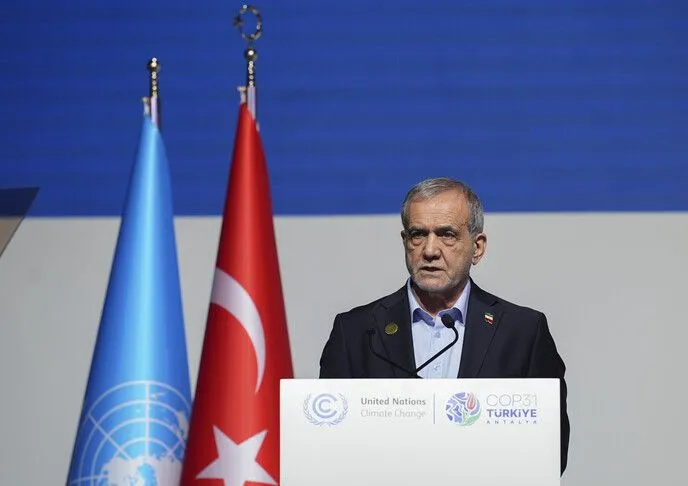
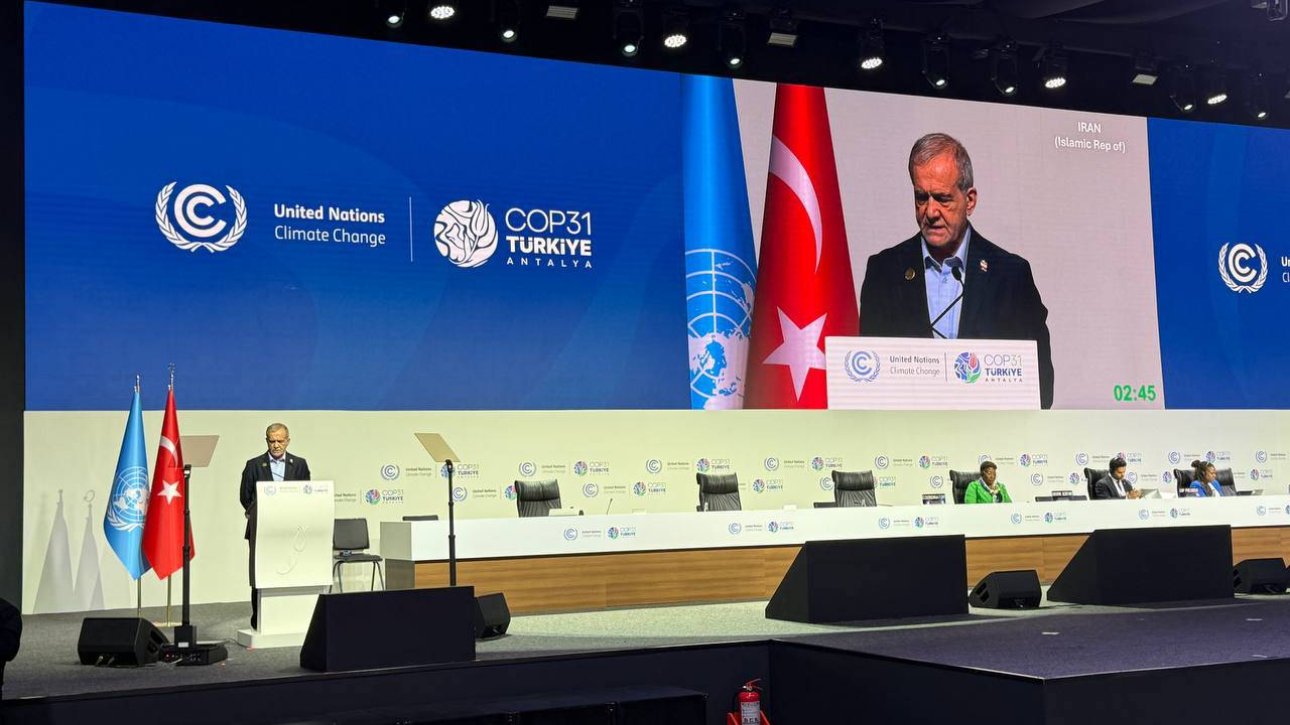
Iranian President Masoud Pezeshkian said at the 31st session of the United Nations Climate Change Conference (COP31) in Antalya, Turkey, that US and Israeli attacks on Iran’s fuel facilities, in addition to human and economic damage, have caused serious environmental harm to the country and led to the emission of about 1.5 million tons of carbon dioxide.
According to Pezeshkian, assessments show that the attack on the Asaluyeh fuel facilities caused the emission of nearly 500,000 tons of carbon dioxide. Also, the deliberate attack on fuel depots around Tehran led to the release of about 1 million tons of carbon dioxide into the atmosphere.
He described this situation as a clear and worrying contradiction and warned: While the global community is trying to reduce greenhouse gas emissions and adapt to climate change, large-scale military operations, with fuel consumption, munitions explosions, destruction of infrastructure, and widespread fires, are destroying the achievements of years of effort in climate and environmental protection.
Pezeshkian added that attacks on Iran’s protected areas and environmental stations have damaged natural resources and threaten the future of next generations.
Emphasizing the need for international accountability, the Iranian president asked relevant institutions to document the environmental damage caused by US and Israeli military operations in Iran and Gaza and to provide mechanisms for compensating these damages.
In another part of his speech, he referred to Iran’s progress in renewable energy and said that the installed capacity in this sector has increased from 1,250 megawatts to more than 6,150 megawatts over the past two years. According to Pezeshkian, clean electricity generation in the country this year has reached more than 4.5 billion kilowatt-hours, and through this, the emission of about 2.5 million tons of carbon dioxide has been prevented.
Pezeshkian also condemned Israel’s military operations in the Gaza Strip and said that the destruction of infrastructure, water resources, and ecosystems in this region has created a human and environmental disaster. In the end, emphasizing the inseparable link between peace and environmental protection, he considered lasting peace a necessary condition for protecting the planet Earth.