Araghchi: The closure of the Strait of Hormuz is the result of US and Zionist regime attacks
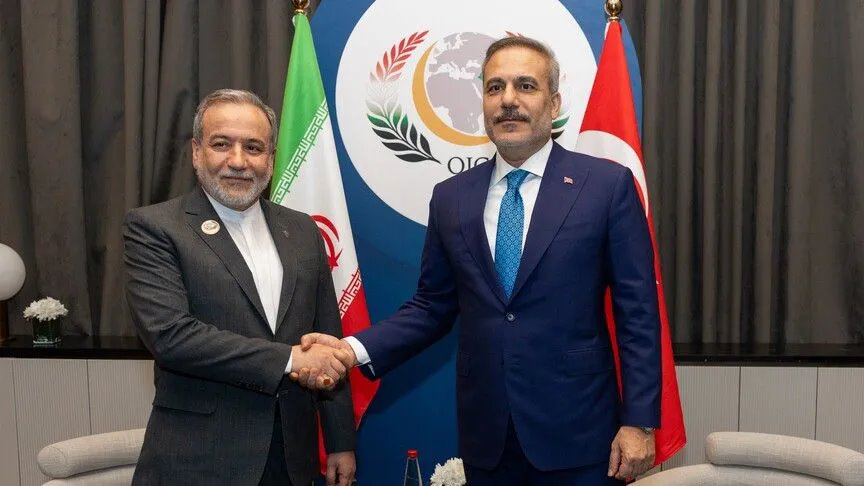
Iran’s Foreign Minister met with the foreign ministers of Egypt and Turkey on the sidelines of the 52nd meeting of the Council of Foreign Ministers of the Organization of Islamic Cooperation in Baghdad.
In these meetings, bilateral relations, regional and international developments, and issues of the Islamic world were discussed.
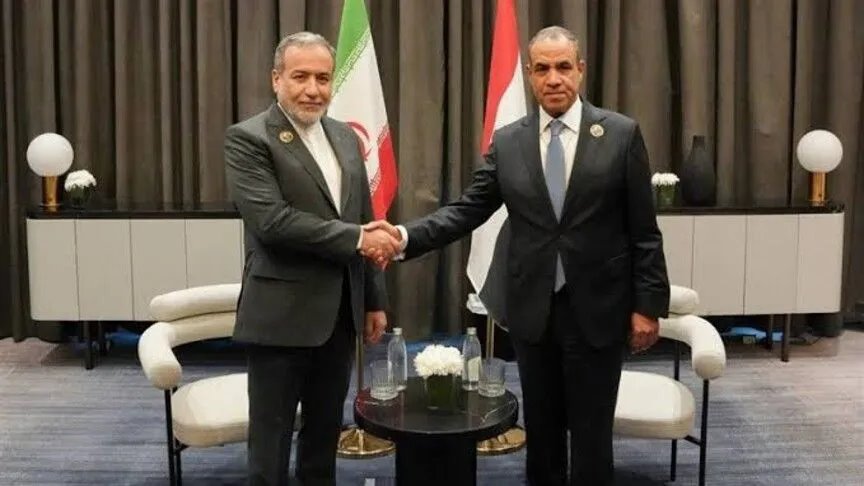
Meeting with Egypt’s Foreign Minister
Abbas Araghchi held talks with his Egyptian counterpart, Badr Abdelatty, about bilateral relations and regional and international developments.
Iran’s Ministry of Foreign Affairs announced in a statement that Araghchi described the closure of the Strait of Hormuz as the result of US and Zionist regime attacks on Iran.
He emphasized that Tehran remains committed to diplomatic solutions to reduce tensions.
Iran’s Foreign Minister accused the US of repeatedly violating agreements and said that Washington violated the latest agreement reached only two weeks after it was achieved.
Araghchi also briefed his Egyptian counterpart on the latest indirect negotiations between Iran and the US through mediators.
In this meeting, developments in the Arabian Peninsula were also reviewed.
Araghchi announced Iran’s readiness to provide any assistance to stop the clashes between Saudi Arabia and Yemen.
Meeting with Turkey’s Foreign Minister
In another part of the Baghdad consultations, Turkey’s Foreign Minister Hakan Fidan met with Abbas Araghchi on the sidelines of the meeting.
No details were published about the topics discussed by the Turkish and Iranian foreign ministers.
Fidan also met with President Nizar Amidi, Foreign Minister Fuad Hussein, and Faiq Zaidan, head of Iraq’s Supreme Judicial Council, during his visit to Iraq.
Speech at the OIC Meeting
Araghchi said in a speech on Saturday at the 52nd meeting of the Council of Foreign Ministers of the Organization of Islamic Cooperation in Baghdad that a plan had been presented to the US through Qatar for reopening the Strait of Hormuz and normalizing shipping.
He added: “We have announced the 7-day plan, and now the choice is with the US.”
Araghchi, stating that security cannot be ensured by repeating past mistakes and attacks, said: “It cannot be expected that by bombing a country, threatening to destroy it, and putting it under siege, maritime security would return to normal.”
He stressed that Iran will continue to defend its sovereignty and the legitimate interests of its people.
Araghchi added that there is no contradiction between defending one’s rights and striving for peace.
Iran’s Foreign Minister emphasized the need to keep solidarity and communication among Islamic countries alive.
Concern over Developments in Yemen and Saudi Arabia
Araghchi said about the clashes between Saudi Arabia and the Houthis: “Tehran supports the independence and territorial integrity of both Yemen and Saudi Arabia.”
He added that Iran is very concerned about developments in the Arabian Peninsula and that seeking military solutions to regional crises will deepen the problems.
Araghchi noted that regional security must be ensured through cooperation among the countries of the region itself.
Details of the Seven-Day Plan
Araghchi had previously said in remarks to reporters at the United Nations on September 26 that if the conditions are met by the US within 4 to 5 days, the Strait of Hormuz could be reopened on the sixth day and talks could begin on the seventh day.
He had emphasized that the conditions in the plan presented to Washington are not new and that all of them are included in the memorandum of understanding signed between the parties.
On the other hand, the US President, stating that the 7-day ceasefire proposal presented by Iran through mediators for reopening ship traffic in the Strait of Hormuz was rejected.