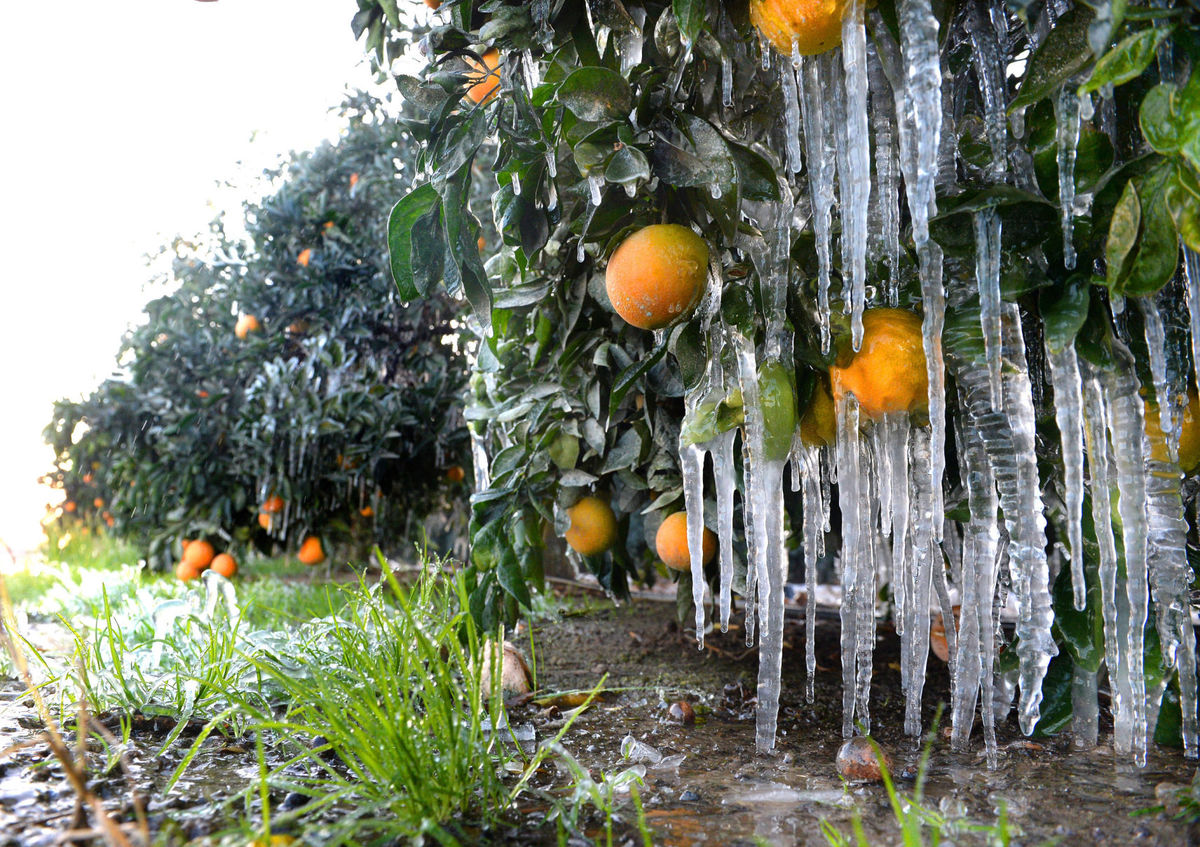
The frost disaster in Turkey: The frost disaster, which began on February 22 and lasted for four days, caused significant damage in Çukurova, one of Turkey’s major fruit and vegetable production centers. Producers suffered serious losses with a 50 to 80 percent decrease in yield.
The Çukurova region in Adana faced a major agricultural crisis due to the frost that began on February 22 and lasted for four days. Nighttime temperatures dropping to -8°C caused losses of 50 to 80 percent in many crops, especially citrus fruits.

The president of the Adana branch of the Chamber of Agricultural Engineers revealed the extent of the frost disaster in a press conference statement. Tayakisi said: “Serious damage has been observed in crops such as tomatoes, potatoes, lettuce, watermelon, citrus fruits, and nectarines. Depending on the type, our producers’ crops suffered between 50 to 80 percent damage.” He added: “This has nearly brought agricultural production to an end even before it began.”
The effects of the frost disaster will not be limited to producers. Tayakisi stated that this disaster will directly impact the prices of vegetables and fruits. This situation has caused significant harm to agriculture and farmers in the Eastern Mediterranean region, as well as to the country’s economy. Producers, consumers, exporters, and agricultural chemical sellers will all be negatively affected by this situation.
Farmers’ crop losses may negatively impact the country’s agricultural production capacity and lead to further increases in food prices.