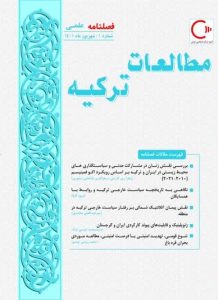
Ethnic Diversity, Security Threat or Security Opportunity, A Case Study of the Karabakh Crisis
One of the most important characteristics of the post–Cold War world is the rise of particular identities, including ethnic nationalism, which, in the rigid atmosphere of the bipolar era, had little chance to emerge: on the one hand, because of ideological and geopolitical boundaries that suppressed the expression of intense ethnic diversity, and on the other hand, due to the misguided policies toward ethnic minorities during the rule of the Soviet Union, there was a clear revival of ethnic minorities, which at times also led to the outbreak of costly wars. Therefore, examining the relationship between identity and security in the Karabakh region is of great importance. This article seeks to explain the role of ethnic diversity in the study of security issues and the dilemmas of Karabakh. The main research question is that ethnic diversity in the Karabakh region is considered a security threat. The research hypothesis indicates that ethnic diversity, in a contradictory context, functions both as a threat and as an opportunity within a specific discursive space. Using a descriptive–analytical method and drawing upon reliable texts, this research demonstrates that ethnic discourses in the framework of a postmodern approach are not only a threat but also an opportunity for the desecuritization of identity issues.
The full text of the article can be viewed at the link: