Trade Development between Iran and Turkey from Bazargan to Mersin
Iran and Turkey, with the aim of raising bilateral trade to $30 billion, have put on their agenda the development of the Bazargan border, the creation of a fourth crossing, strengthening road and rail transport, using Turkey’s ports, and establishing a joint free zone among Khoy, Van, and Mersin.
According to announced statistics, the volume of Iran-Turkey trade in 1404 was about $19.2 billion; $6.8 billion was Iran’s exports to Turkey and $12.4 billion was imports from that country. In the first five months of 1405, Iran’s exports to Turkey were recorded at $3.7 billion and imports from Turkey at $2.8 billion. Achieving the $30 billion target means an increase of about $10.8 billion in trade compared with last year.
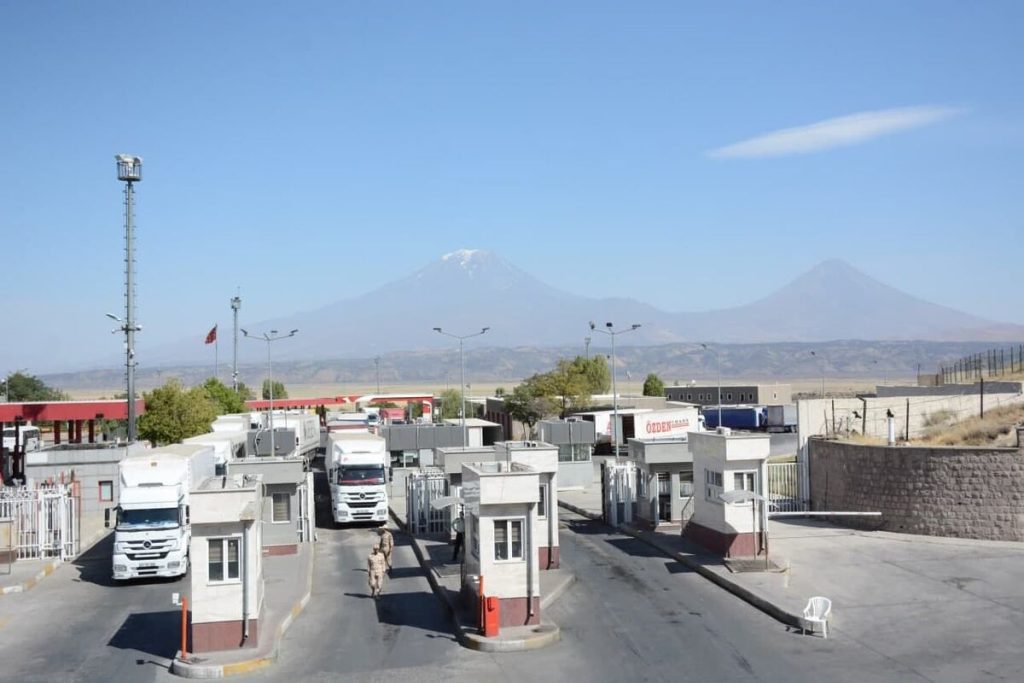
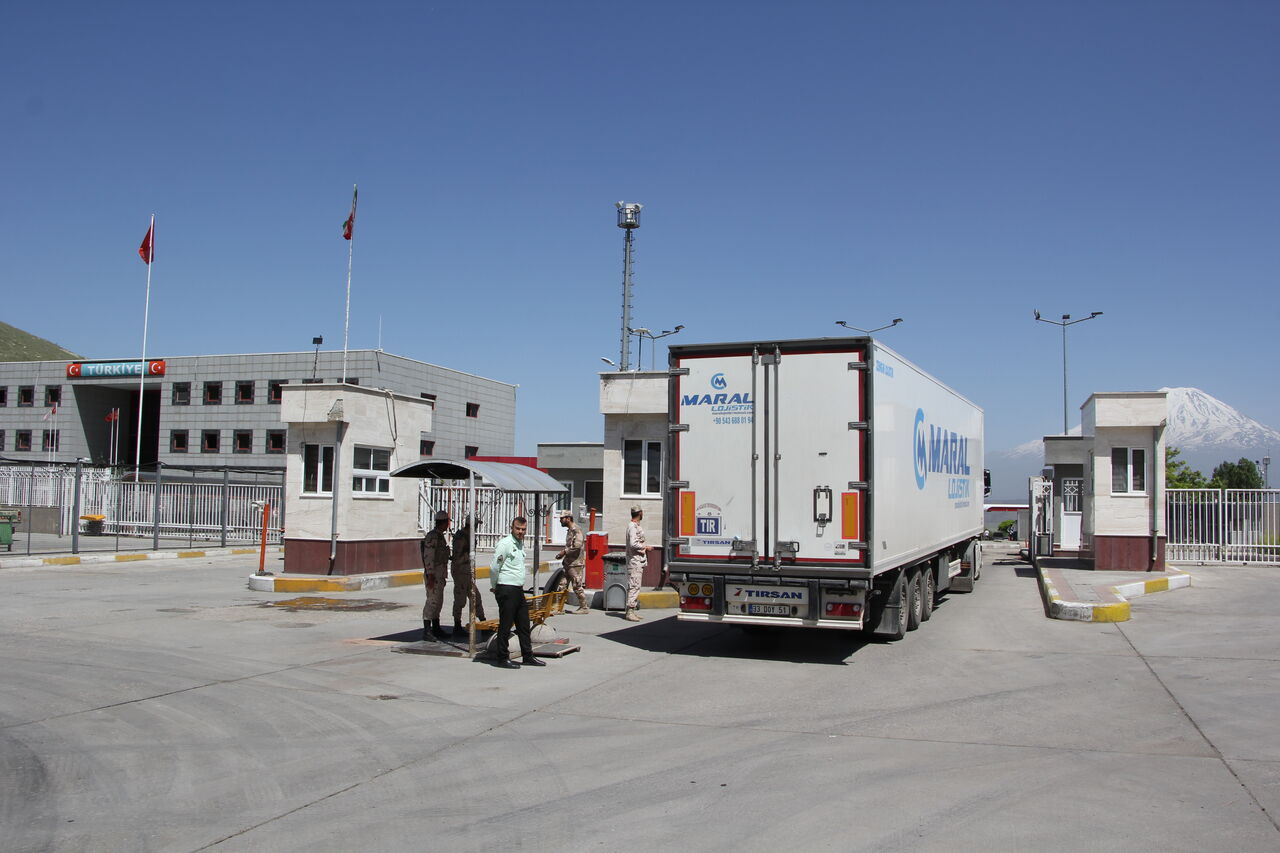
The Bazargan border is the most important land connection point between Iran and Turkey. In recent months, the capacity of this border has increased, and in Mordad the number of trucks crossing reached more than 350 per day. A target has been set to increase this figure to 400. From the beginning of the year to Mordad, about 190,000 tons of goods were exported to Turkey via Bazargan, a 40% increase compared with the same period last year. During the same period, about 150,000 tons of basic goods, medicine, food items, and other imported items entered and cleared through Bazargan, showing 250% growth.
In Mordad, Iran and Turkey held a joint meeting to examine the problems of truck movement and waiting times. Gradually increasing truck traffic, broader use of the TIR Carnet (road transit customs document), and implementation of the e-TIR electronic system were among the solutions raised at the meeting. The International Road Transport Union also declared the Gürbulak-Bazargan route one of the region’s important road corridors.
Currently, three main crossings are active between Iran and Turkey, and the creation of a fourth crossing in the Kuzeh Rash area has been pursued in recent years. An initial agreement to create this crossing near Salmas has been raised, with the aim of increasing trade capacity and reducing pressure on existing crossings.
The creation of a joint free zone among Khoy, Van, and Mersin is also being pursued. The head of the Iran-Turkey Parliamentary Friendship Group has announced that the proposal to create this zone with Khoy at its center has been followed and that the Iranian government’s approval for it has been obtained. Under this plan, the Khoy and Van route would continue and connect to Mersin, and creating economic hinterlands at the Razi border to support it has been deemed necessary. The secretary of the Supreme Council of Free Zones has also said that the necessary measures and coordination by Iran for launching the Khoy-Van joint free zone have been carried out, and continuing the work requires coordination with the Turkish side.
The capacity of Turkey’s ports, including Mersin, Samsun, Trabzon, and Izmir, is also among the areas of interest in developing trade relations. According to this report, Mersin Port, in connection with the Iran-Turkey land route, can be used as a maritime hinterland for Iran’s trade with Mediterranean and European markets.
The main issue for Iran is not only increasing the value of exports; rather, it is increasing the share of Iranian goods in the Turkish market and using Turkey as a route to access third markets. For Iran, Turkey is both a destination market and a link in the chain of access to European and other regional markets. On the path to $30 billion in trade, the cost, speed, and routes of moving goods between the two countries and to markets beyond are determining factors.
Trade between the two countries still faces obstacles such as anti-dumping measures, quotas on some goods, higher duties and fees, and transit problems. In recent years, thousands of companies with Iranian capital have operated in Turkey, and according to the Istanbul Chamber of Commerce representative in Tir, the number of these companies has reached 7,288.