Kurtulmuş: Recognition of Palestine is a Historic Turning Point
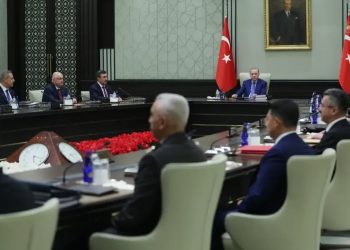
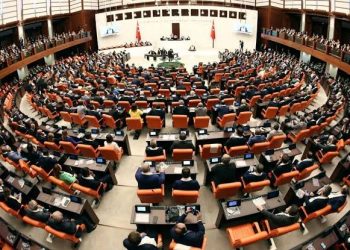
The twelfth meeting of the “Commission on National Solidarity, Brotherhood and Democracy” in the Grand National Assembly of Turkey was held under the chairmanship of Numan Kurtulmuş. The commission, which operates with the goal of achieving a “Terror-Free Turkey,” addressed not only domestic issues but also regional and international developments in this session.
At the beginning of the meeting, Kurtulmuş offered condolences on the passing of Vahdettin Kaygan, a board member of the Humanitarian Relief Foundation (İHH), and recalled his contributions in the field of humanitarian diplomacy. He then presented a report on the commission’s activities, noting that so far 80 individuals had been heard, more than 50 hours of work had been carried out, and approximately 830 pages of minutes had been recorded. According to him, the process has progressed “even more systematically and productively than anticipated.”
The Speaker of the Grand National Assembly of Turkey also referred to recent developments at the United Nations, describing the decision of 10 countries to recognize Palestine as “beyond praise.” He called this step a significant milestone for the Palestinian cause and, on behalf of the Grand National Assembly of Turkey, extended congratulations to the parliaments and governments of those countries.
Later in the session, experts and researchers shared their views on the “Terror-Free Turkey” process. Professor Murat Yeşiltaş, Director of Foreign Policy Research at the Foundation for Political, Economic and Social Research (SETA), emphasized that the most important issue for Turkey is to transform the disarmament period into a sustainable process for social peace. Referring to the model of Disarmament, Demobilization and Reintegration (DDR), he called for the design of a framework tailored to Turkey’s conditions and warned that 62 percent of the public believe failure of the process would lead to a return of violence.
Mesut Azizoğlu, President of the Dicle Social Research Center (DİTAM), stated that the Kurdish issue has entered a new phase and stressed that the absence of a solution harms not only the Kurds but all of Turkey. Sedat Yurtdaş, Deputy President of the same center, called for the constitutional recognition of Kurdish identity and the guarantee of linguistic rights in education and media, saying that “now is the time for words to be turned into action.”
Roj Asir Giresun, Director of Research at the Rawest Center for Social and Political Studies, pointed to sociological changes among Kurds, noting that 65 percent firmly oppose armed struggle while only 15 percent support it. He added that public support for the “Terror-Free Turkey” process is approaching 70 percent, though confidence in its ultimate success remains around 40 to 45 percent.
İbrahim Reha Ruhavioğlu, President of the Kurdish Studies Center, also stated that today fewer than 10 percent of Kurds consider armed struggle a priority. He added that alongside the strengthening of Kurdish identity, the sense of belonging to Turkey has also risen, increasing from 52 percent to 65 percent.