Security Review Commission Begins Work in Turkish Parliament
The Grand National Assembly of Turkey held the first meeting of the “National Solidarity, Brotherhood, and Democracy Commission” on Monday. This newly established body, formed as part of the government’s plan to create a “Turkey without terror,” will examine the country’s security, legal, and social issues.
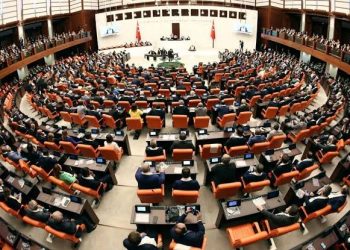
The inaugural session took place in the Parliament’s ceremonial hall, with representatives from all political factions in attendance. Reports indicate that deputies from various parties, including the ruling Justice and Development Party (AKP), the Republican People’s Party (CHP), the Nationalist Movement Party (MHP), and the Peoples’ Democratic Party (HDP), participated in the meeting.
HDP lawmakers, led by Gülistan Kılıç Koçyiğit and Meral Danış Beştaş, emphasized the full implementation of European Court of Human Rights (ECHR) rulings concerning certain political prisoners, such as Figen Yüksekdağ and Selahattin Demirtaş. They also raised the issue of Abdullah Öcalan’s prison conditions and the need to uphold the “right to hope” for inmates serving life sentences.
In contrast, representatives of the ruling parties stressed the necessity of a firm fight against terrorism and the preservation of national security, calling for the commission to operate within the framework of Turkey’s constitution and national interests.
In its next session, the commission will host Interior Minister Ali Yerlikaya, Defense Minister Yaşar Güler, and National Intelligence Organization (MIT) President İbrahim Kalın. These officials are expected to present reports on security developments and counterterrorism efforts.
Turkish Parliament Speaker Numan Kurtulmuş described the commission as a “symbol of national unity,” stating, “We are at a critical juncture in our country’s history, and this commission can play a vital role in strengthening social solidarity and addressing security challenges.” He urged all parties to engage in the process with a sense of responsibility.
The commission comprises representatives from all parliamentary parties, and its major decisions will require at least a three-fifths majority. Sessions will generally be held behind closed doors unless members decide otherwise. The commission is mandated to submit its final report by the end of 2025, though this deadline may be extended if necessary.