Trump’s Persian Gulf Tour: Persian Gulf and Beyond
U.S. President Donald Trump embarked on his first Middle East trip of his second presidential term from May 13 to 16. This tour, which included visits to Saudi Arabia, Qatar, and the UAE, saw each stop marked by distinct developments and debates. The economic and military agreements signed with each country, along with the articulation of positions on regional geopolitics and recent events, signify that the impact of this trip extends far beyond the Gulf.
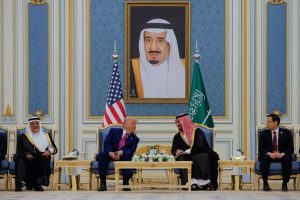
Trump arrived in Saudi Arabia on May 13, where he was greeted at the airport by Crown Prince Mohammed bin Salman (MBS). This visit, largely focused on economic deals, saw Saudi Arabia pledge $1.5 trillion in investments in the U.S., including semiconductor production and renewable energy systems. However, some experts remain skeptical about how such a massive investment will be implemented.
Beyond economic agreements, one of the most striking moments of the trip was Trump’s meeting with Ahmed al-Shara. President Erdoğan also joined this tripartite discussion in Riyadh via teleconference. This meeting marked the first face-to-face encounter between a Syrian leader and a U.S. president since 2000. Moreover, Trump frequently referenced Erdoğan in his remarks on Syria and included him in the meeting—demonstrating that the world’s superpower acknowledges Turkey’s critical role in rebuilding a new Syria.
Trump’s announcement that he would lift all sanctions on Syria was the most significant development regarding the country’s future. Turkey had long urged the U.S. to remove these sanctions. Lifting them will help Syria reintegrate into the global economy, accelerate the war-torn nation’s recovery, and foster economic development. Following Trump’s decision, the EU also lifted sanctions on Syria, paving the way for its reconstruction. This creates a more favorable environment for Turkish economic investments in Syria, and we can expect Turkish companies to play a major role there in the coming period.
The Qatar leg of the trip on May 14 stood out with economic agreements and a luxury Boeing jet gifted to Trump. The visit resulted in $1.2 trillion in trade deals, primarily in defense, and secured Boeing’s largest-ever order from Qatar—210 jets worth an estimated $96 billion. The UAE stop similarly facilitated hundreds of billions in commercial agreements, particularly in AI and technology.
One of the tour’s key political messages was Trump sidelining Israel. Tensions between Trump and Netanyahu are no secret. Trump is deeply frustrated with Netanyahu’s hawkish stance on Yemen, Iran, and Gaza. Unable to sway Netanyahu, Trump has begun moving without him. The Gulf tour marked direct U.S.-Gulf engagement—without Israel. Additionally, meeting Syria’s leader and including Erdoğan sent a blunt message to Netanyahu: unconditional U.S. support has expired.
On Gaza, Saudi Arabia’s position is clear: normalization with Israel requires an end to the bloodshed and recognition of a Palestinian state. Trump, too, no longer pressures Saudi Arabia to normalize ties with Israel as before. Meanwhile, the U.S. has initiated direct talks with Hamas—another blow to Israel. America no longer treats Israel as an indispensable actor.
Iran was another focal point. Unlike his 2017 Riyadh visit, Trump this time sought alignment among Gulf leaders not to counter Iran but to engage with it. He stated that U.S.-Iran negotiations are progressing positively. Gulf leaders also expressed openness to a deal. Saudi Foreign Minister Faisal bin Farhan said successful U.S.-Iran talks would boost regional stability and even advance Palestinian statehood. Notably, during Trump’s visit, Iran announced readiness to form a nuclear consortium with Saudi Arabia and the UAE—a far cry from the anti-Iran Trump-Saudi-Israel bloc of 2017. China-brokered Saudi-Iran détente and post-October 7 dynamics have reshaped the landscape.
In summary, Trump’s trillion-dollar deals are a win for the U.S. economy, though their feasibility is debated. Politically, sidelining Israel, lifting Syria sanctions, and prioritizing Iran engagement are seismic shifts. This rebalancing counters Netanyahu’s destabilizing moves and deepens Israeli elites’ anxieties. Yet the tour’s ramifications stretch beyond Israel—reshaping the Middle East’s future from Iran and Syria to Yemen and the Gulf.
This article was also published in Sabah newspaper: