Bayraktar Announces Major Investments in Energy
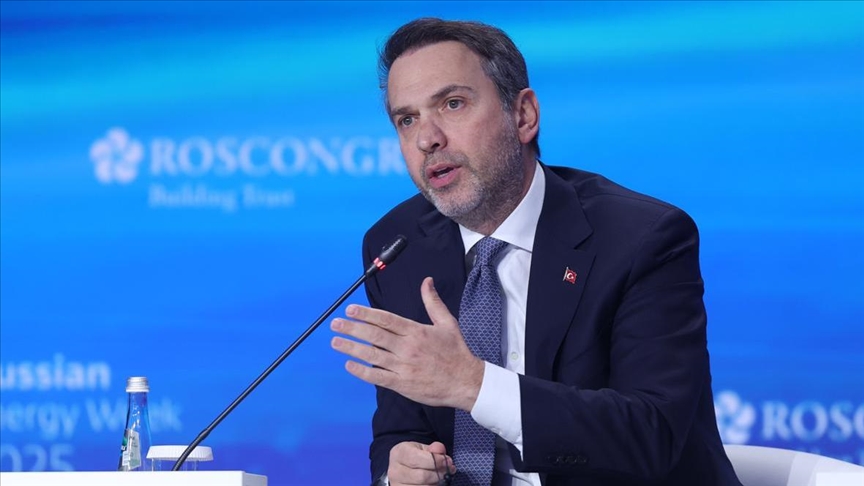
Alparslan Bayraktar, Turkey’s Minister of Energy and Natural Resources, announced that the country is pursuing a comprehensive, rational, and flexible policy called the “Turkish Path” to meet its growing energy demand. He emphasized that Turkey’s energy demand will increase significantly over the next three decades.
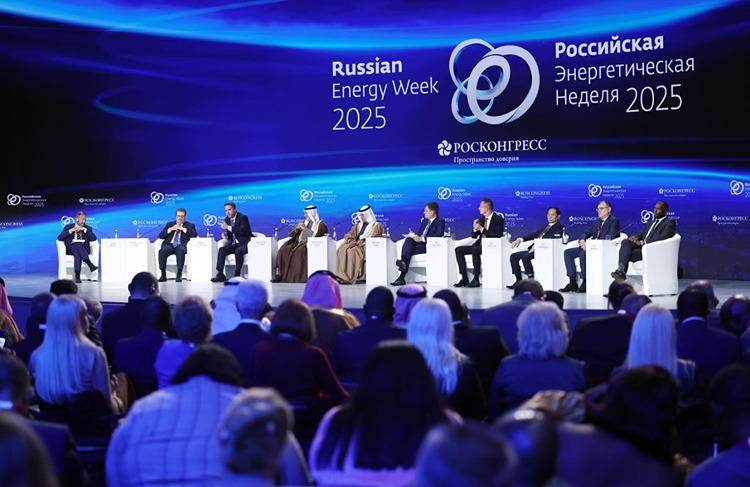
Speaking at the session “Global Energy Markets: Transformation of Relations and Balance of Interests” held in Moscow as part of Russian Energy Week, Bayraktar highlighted the challenges of energy security, stating: “Providing reliable energy at affordable costs is becoming increasingly difficult. Over the past five years, we have faced COVID-19, supply chain disruptions, fluctuations in energy and commodity markets, trade wars, conventional wars, and geopolitical tensions. This environment has made it much harder to carry out the necessary investments in the energy sector.”
Noting that Turkey has developed its own unique path under these geopolitical conditions, Bayraktar said: “I call this the Turkish Path. Our goal is to meet energy demand, reduce dependence on imports, and become a carbon-free country by the middle of the century. We do not exclude any energy source; we must be open to every source and every fuel.”
The Minister stressed that energy policies must be rational rather than emotional or ideological. He added that conservative estimates show Turkey’s electricity demand will triple over the next 30 years.
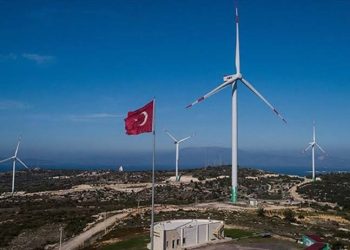
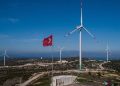
Bayraktar stated: “Every year, 8 to 9 gigawatts of renewable energy capacity are commissioned in Turkey. Our goal is to increase this capacity to 120 gigawatts by 2035. At the same time, we are investing in nuclear energy. Four nuclear reactors are under construction in Akkuyu in cooperation with Rosatom, and next year our first reactor will be commissioned.” He added that Turkey plans to build at least 12 large conventional reactors and around 5 gigawatts of small modular reactors (SMRs).
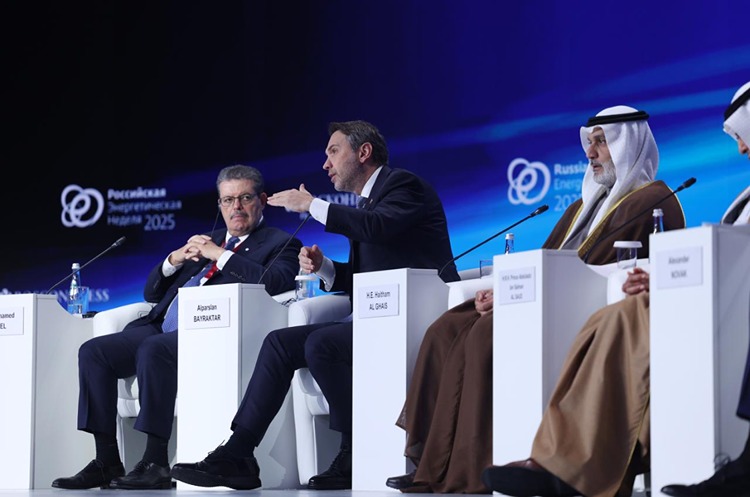
Referring to the importance of natural gas, the Minister said that since 2016 Turkey has focused on exploration, production, transmission, and distribution, and has thus become a natural gas exporter. Turkey’s LNG regasification capacity has risen from 32 million cubic meters per day in 2016 to 161 million cubic meters today, with pipelines such as TurkStream and TANAP being key examples of these investments.
He stated: “We need nearly 60 billion cubic meters of gas annually. By 2028, we aim to produce 16 billion cubic meters of gas from the Black Sea. We are also cooperating with international oil and gas companies in many regions, from Pakistan to Libya, Somalia to Iraq, and the Caspian Sea.”
Highlighting the importance of LNG, Bayraktar said: “LNG provides us with significant flexibility and competitiveness. With the ‘Turkish Blend’ model we have created by combining gas from different countries, we can export additional gas, especially to the markets of Southeastern Europe.”
Emphasizing Turkey’s role in Europe’s energy security, Bayraktar pointed to the Trans-Anatolian Natural Gas Pipeline (TANAP), which carries gas from the Caspian Sea to Europe and Italy, as well as the TurkStream agreement signed in Istanbul in 2016. He added: “The goal is to increase interconnection capacity between Turkey and Europe not only in oil and natural gas but also in electricity. This requires strong political will and determination.”