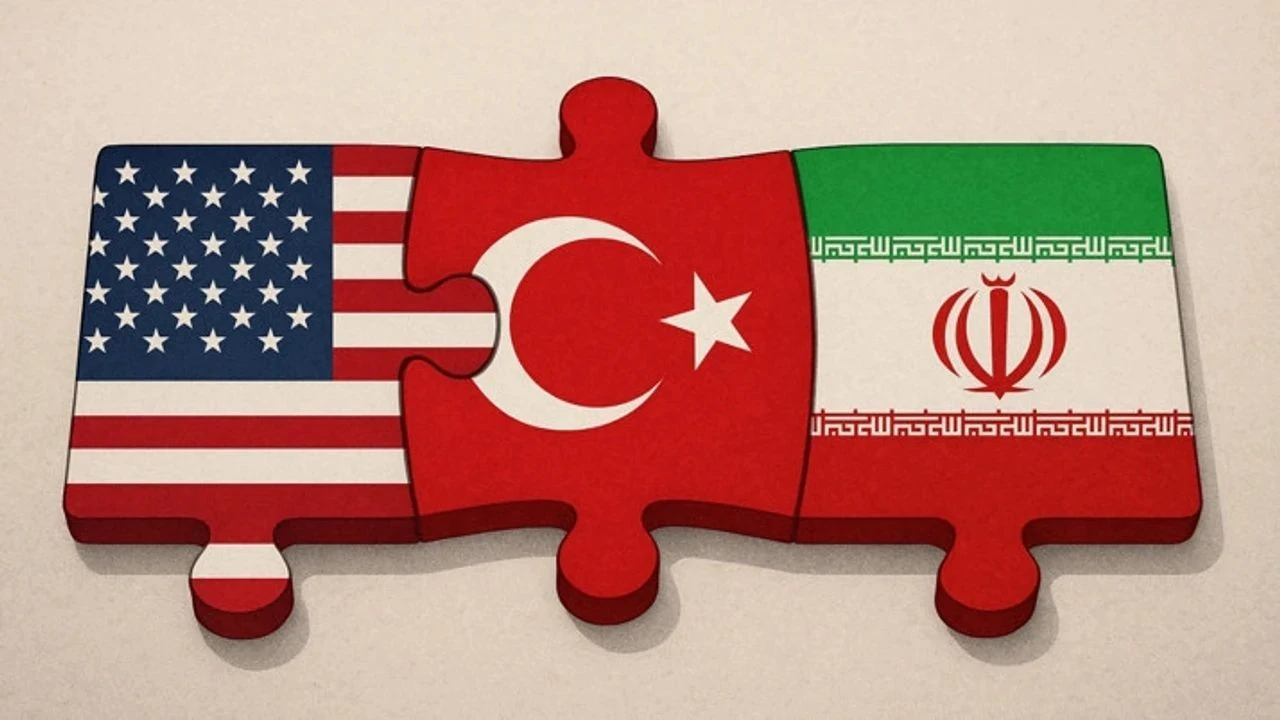
Diplomacy in Ankara Could Be an Alternative to War as Tension Peaks Between Iran and United States
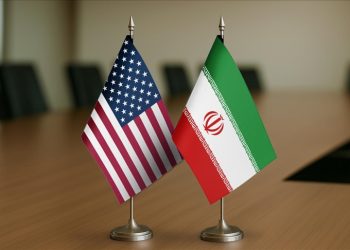
The meeting that Iranian Foreign Minister Abbas Araghchi will hold with Foreign Minister Hakan Fidan in Ankara on January 30 stands out as a critical diplomatic move where the most sensitive topics of regional and global power struggles will be addressed. The meeting takes place at a time when tensions are rising again on the US-Iran line, Washington is increasing its military buildup against Tehran, and is once again turning it into a pressure element to force its conditions on Iran.
– President Erdoğan’s Proposal for a Trilateral Meeting with Pezeshkian and Trump
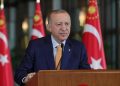
The fundamental factor increasing the importance of this contact is that President Recep Tayyip Erdoğan has brought to the agenda a proposal for a trilateral leaders’ meeting encompassing US President Donald Trump and Iranian President Masoud Pezeshkian. With this proposal, Ankara aims not only to strengthen its mediator role but also to prevent an uncontrolled regional and perhaps global war that could emerge if military options are activated, before it even begins. Turkey’s approach indicates a clear political will that the tension between Iran and the US must be managed through diplomatic, not military, means.
Although Trump’s previous requests for direct meetings with Iranian leaders were rejected by Tehran, the gravity of the situation in Iran and calls from some quarters within the country for Pezeshkian to accept a meeting request with Trump could this time bring Iranian and US leaders together through Turkey’s mediation, even if via a teleconference meeting.
– Turkey’s Clear Stance Against Military Intervention in Iran
In the meeting Foreign Minister Hakan Fidan will hold with Araghchi, it will be emphasized that Turkey-Iran relations have a key role in terms of regional security, stability, and prosperity. Ankara, while openly opposing possible military interventions against Iran, has frequently warned during this process that such a step would have destabilizing consequences not only for Iran but for the entire Middle East and even global security. Turkey also clearly demonstrates that it is ready to actively contribute to lowering the rising tension through dialogue. In this framework, it is particularly emphasized that recent developments in Iran are closely followed, and Iran’s security, peace, and stability are of vital importance for Turkey. Furthermore, the message that the complete neutralization of the terrorist organization PKK and its Iranian branch PJAK is an urgent need not only for Turkey but also for Iran’s national security will be on the table.
– Trump, with Military Buildup and High-Pitched Threats, is Trying to Force Iran to Accept US Demands
On the US front, Trump’s military buildup in the region and his high-pitched threats are read not as direct war preparation but as a pressure diplomacy aimed at forcing Iran to accept Washington’s demands. Military power is used here more as a tool than an objective. The goal is to force Tehran to make concessions, especially on the nuclear program and missile program, but Iran has clearly drawn its lines on this matter.
While Tehran has repeatedly declared its openness to negotiations on the nuclear issue and may even accept the proposal to zero the uranium enrichment level it previously did not accept in this process, it frequently emphasizes that its missile program will not be brought to the negotiation table under any conditions. The US administration demands that Iran restrict its missile range to 300-500 kilometers in a way that does not pose a threat to Israel. It seems unlikely that Iran, whose missile program is its greatest deterrent power, would agree to restrict it.
These non-nuclear topics are seen in Tehran’s eyes not as negotiable policy areas but as red lines directly concerning the state’s survival. Therefore, when Trump’s military buildup and harsh rhetoric are used to force Iran into comprehensive concessions, this strategy triggers a harder resistance reflex in Iran, rather than compromise.
– The Probability of a War Against Iran Being Controllable, Short-Term, and Low-Cost is Extremely Weak
Therefore, if the Trump administration limits the pressure solely to the nuclear file and transforms the military threat from a coercive element into a diplomatic lever, a controlled agreement ground could be formed. Otherwise, the expansion of demands and placing security topics on the table will lead Iran to completely transform the issue into a survival problem and cause the risk of regional conflict to rise rapidly.
From Iran’s perspective, this file is not a technical or tactical issue; it is seen as a security matter directly linked to the state’s survival. Therefore, the Iranian administration clearly demonstrates that it has the capacity and will to give a comprehensive, not limited, response in the face of a possible military attack. The prevailing opinion in Tehran is that the US cannot afford the cost and regional consequences of such a conflict.
Because the probability of a war started against Iran being controllable, short-term, and low-cost is extremely weak. The fundamental realities that the US must consider if it seriously contemplates a military intervention against Iran also support this picture. The Iranian administration has managed to suppress recent waves of protests, and there is no meaningful mass opposition in the field threatening the regime. There is also no organized and legitimate opposition structure ready to take over the state. Although Iranian Leader Ayatollah Ali Khamenei is at the center of the system, the Iranian regime is not dependent on individuals and has an institutionalized and resilient structure. Even the targeted assassination of Khamenei would, rather than collapse the regime, move the conflict to a more radical ground, harden the religious discourse, and increase the weight of the Islamic Revolutionary Guard Corps (IRGC) within the system.
On the other hand, Iran’s security institutions are operating on high alert. The possibility of strategic surprise is extremely limited, and Tehran is determined not to repeat past security vulnerabilities. Regime change, however, does not appear to be a goal achievable with a one-off military operation but a long, complex, and extremely risky process. Attempting such an undertaking without a clear plan for who will govern afterwards would mean serious strategic gambling for Washington. It also appears from Trump’s previous statements that he avoids taking the risk of a long-term war.
– There is No Scenario for the “Definitive Blow” or “Clean Exit” Trump Wants in Iran
On the other hand, Iranian security institutions have also clearly demonstrated through the coordination they displayed during the internal turmoil in protests that turned violent that they are closed to division. This also shows that there is no possibility of regime change in Iran in the near term.
Furthermore, extreme and continuous pressure carries the risk of pushing decision-makers in Tehran toward more radical and unpredictable steps. Starting a war with Iran is much easier than finishing it. The track record of airstrikes in achieving regime change is extremely weak, and there is almost no scenario for the “decisive blow” or clean exit Trump wants. Moreover, an external military intervention could, instead of weakening the regime, strengthen the system in the short and medium term by fostering societal cohesion around the national defense discourse.
– Trump Aims to Make a Quick Deal with Iran and Present It to the Public as a “Gain”
Donald Trump is not actually a leader who wants regime change in Iran. His main goal is to make a quick and, from his perspective, “clear” deal that forces his conditions on Iran and present it to the public as a “gain.” Trump also does not like long processes, uncertainty, and feeling stalled.
This situation makes the process difficult for Iran. For an agreement to be possible, Tehran needs to take quick, clear, and concrete steps, but Iran’s cautious decision-making and diplomacy style does not easily align with Trump’s result-oriented approach. Nevertheless, the diplomacy being conducted in Turkey, if direct contact and mediation channels are kept open, is seen as one of the rare grounds that could enable the parties to reach a limited but concrete compromise.
Precisely for this reason, Araghchi’s visit to Ankara is not merely a diplomatic contact but carries a strong reminder that diplomacy is still on the table against the possibility of war. The role Turkey is playing in this process stands out as a concrete reflection of the approach to managing regional crises with political acumen, not military means.