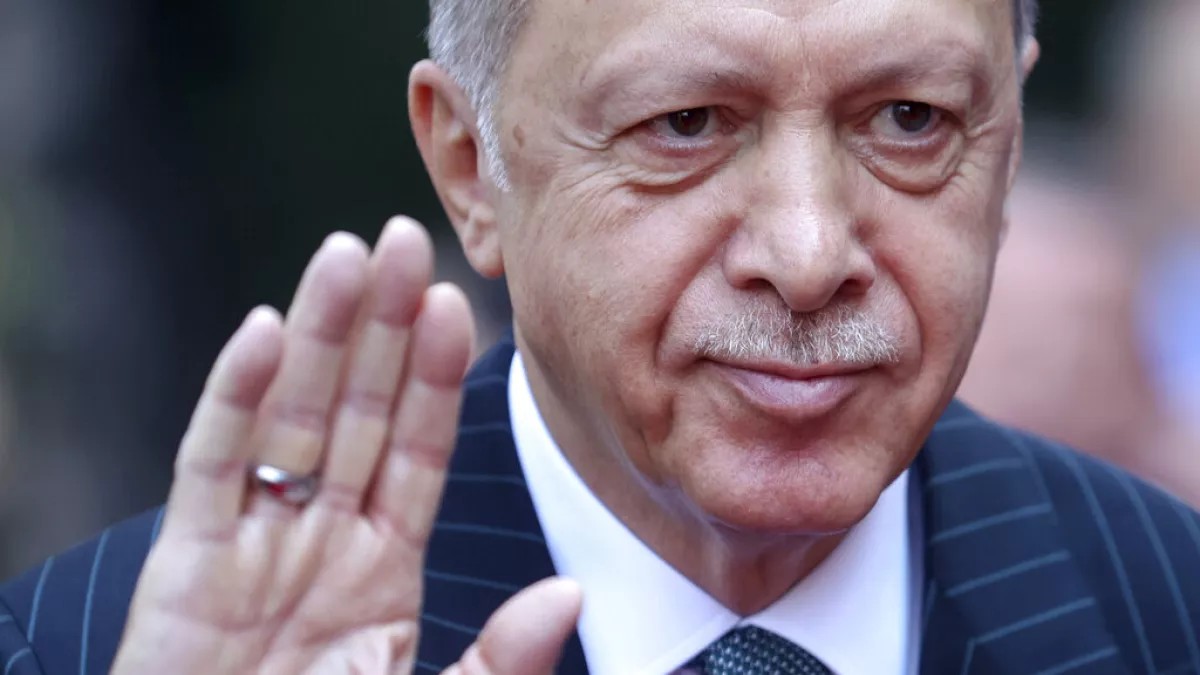
Erdogan Announces He Will Not Run for Re-Election as Turkey’s President.
Erdogan emphasized that Turkey is in a rapidly changing new era and pointed to laws established during the old Turkish coup period that still reflect a coup mentality. He stressed that Turkey can no longer move forward under these conditions and called for a new constitution—one proposed by civilians, not coup plotters.
He also discussed Turkey’s relations with world leaders and hinted at a possible visit to the U.S., where he would meet with former President Donald Trump.
“Donald Trump has a very positive view of Turkey, and we share the same sentiment toward them based on a strong relationship rooted in mutual respect and sincerity,” he said.
Regarding Syria, Erdogan labeled the Syrian Democratic Forces (SDF) and its affiliates as terrorist groups. He criticized the new Syrian government’s focus on agreements with the U.S.-backed, Kurdish-led SDF and insisted that the SDF must be integrated into the Syrian army, pressuring Damascus to implement this deal.
Speaking to reporters on his return flight from Budapest, he said: “Turkey, Syria, Iraq, and the U.S. have formed a committee to discuss the fate of ISIS detainees in camps in northeastern Syria, which have been under SDF control for years.”
Analysis and Conclusion
Erdogan’s push for constitutional changes could also be interpreted as a strategy to run again in the next presidential election.
Under Turkey’s current laws, the Supreme Court and judges can independently decide on such matters, free from presidential or other political influence.
However, it seems that “Erdoganism”—with its two-decade legacy of embedding influence across state institutions—will not easily disappear from Turkey. His ideology may persist long after his departure.
Unlike Mustafa Kemal Atatürk, Erdogan does not have a distinct doctrine or ideology. But if we consider “Erdoganism” as a political approach and acknowledge that the Justice and Development Party’s (AKP) influence is not yet over, we must examine his pragmatic governance. Erdogan’s popularity stems from his executive power, action-oriented policies, oratory skills, and charismatic leadership.