Iran’s Knowledge-Based Export Capacities in the Turkish Market
Iran’s knowledge-based product exports have shown steady growth in recent years, reaching 2.7 billion USD in 2024 (year 1403 in the Iranian calendar). However, Turkey’s share of this export volume was only 186 million USD, which, according to officials, does not reflect the true capacity of Iranian companies.
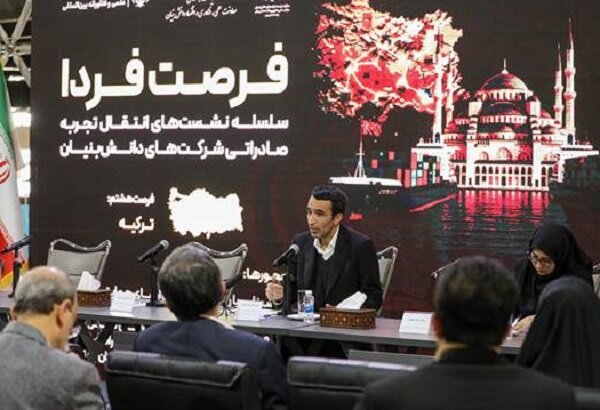
Touraj Emraei, Deputy for Development of Knowledge-Based Companies at the Vice Presidency for Science, Technology and Knowledge-Based Economy, stated during an export experience transfer meeting focused on Turkey that China, the United Arab Emirates, and Iraq were the top three destinations for knowledge-based exports last year, with Turkey ranking fourth. He emphasized that geographical proximity and Iran’s advantages in fields such as medical equipment, energy, advanced chemicals, information technology, and electrical and electronic industries provide a strong basis for expanding exports to Turkey.
According to Emraei, Iran’s export basket to Turkey is still dominated by chemicals, energy, and metal-mineral industries, while the share of high-tech products remains limited. Out of approximately 600 knowledge-based companies active in exports, only 178 entered the Turkish market in 2024, highlighting the potential for further development.
Pointing to the gap between the capabilities of Iranian companies and the current export figures, Emraei stressed the need to focus on two key areas: price competitiveness and quality improvement through obtaining international standards. He also referred to the capacities of the Knowledge-Based Production Leap Law, noting that Articles 11 and 13 of this law allow companies to benefit from tax credits for research and development expenses—a mechanism that can help raise technology levels and facilitate access to export markets.
Emraei added that projects aimed at enhancing the quality of knowledge-based products, increasing technological complexity, or achieving export-grade standards are eligible for such tax credits. Even testing and certification costs, including those conducted abroad, can be supported under this framework if they fall within R&D projects.
The Deputy for Development of Knowledge-Based Companies concluded by urging firms to take advantage of this legal capacity to upgrade their products to export levels and underlined the importance of continuing export experience transfer meetings.