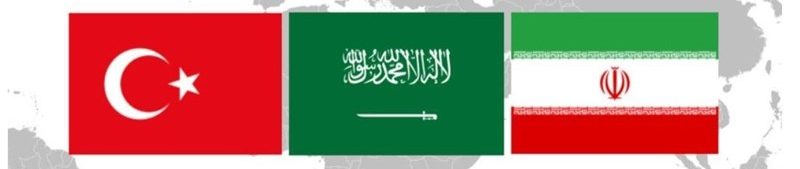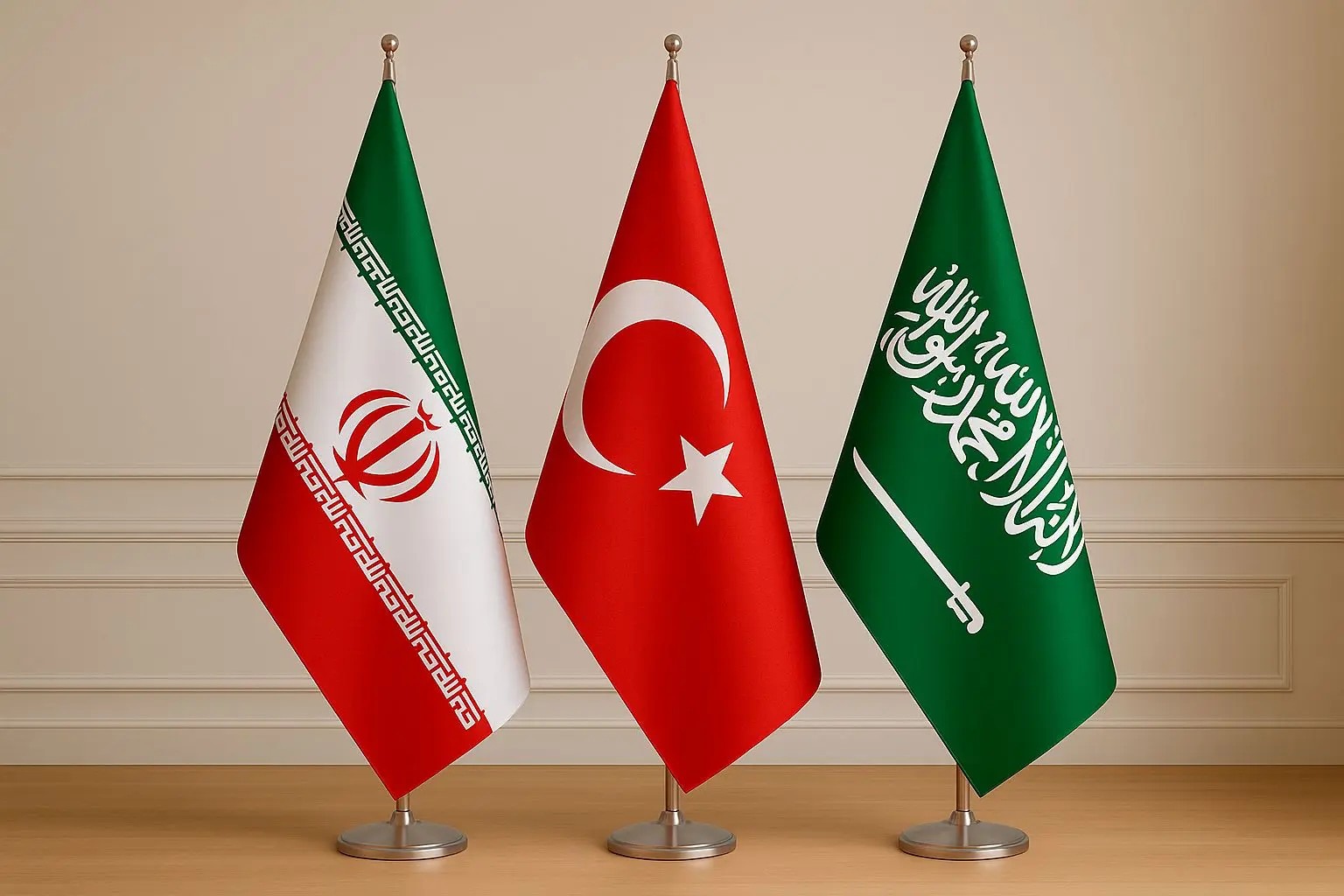
The Political Economy of the Triangular Competition Among Iran, Saudi Arabia, and Turkey
In the regional competition among Iran, Saudi Arabia, and Turkey, economic power plays a decisive role as one of the key components of the balance of power. Contrary to traditional analyses that frame Middle Eastern rivalries solely in security or ideological terms, economic data reveals that economic strength serves as a fundamental tool for all three countries in pursuing their strategic objectives.
According to World Bank statistics for 2023, Turkey, with a GDP of $1.12 trillion, has the highest gross domestic product among the three nations. Compared to Iran and Saudi Arabia, Turkey’s economy boasts a more diversified structure, and through industrial policies, institutional reforms, and foreign investment attraction, it has achieved an economic growth rate of 5.1%. This has strengthened Turkey’s position to play an active role in regional competition.
In contrast, Saudi Arabia, with a GDP of approximately $1.07 trillion, ranks first in the region in terms of per capita income ($32,094). However, its economic structure remains dependent on oil exports, which led to a negative economic growth rate (-0.8%) in 2023. Oil dependence has made Saudi Arabia vulnerable to energy market fluctuations, and despite massive investments in projects like Vision 2030, this remains a significant challenge.
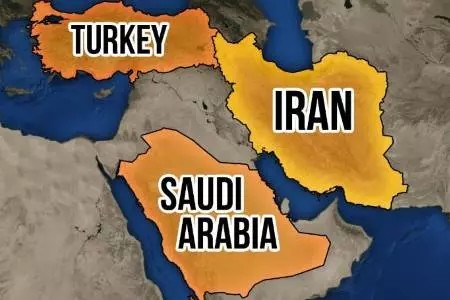
Iran, with a GDP of around $404 billion and a per capita GDP of $4,465, ranks third. Despite extensive sanctions, Iran recorded a 5% economic growth rate, demonstrating its domestic economic resilience against external pressures. However, weaknesses in attracting foreign investment, a rentier economic structure, and fiscal imbalances remain major challenges for Iran’s economy.
A comparative analysis of the three countries shows that, at the macro level of Middle Eastern political economy, Turkey holds the most favorable position for strategic maneuvering. Unlike Iran, which is constrained by a closed system and sanctions, or Saudi Arabia, which faces oil-centric challenges, Turkey has been able to leverage its geo-economic potential through trans-regional projects such as the Middle East Corridor and the Belt and Road Initiative. Simultaneously, by combining economic diplomacy with military technology exports (e.g., multi-billion-dollar drone deals with Saudi Arabia), Turkey seeks to solidify its position as a “strategic economy”—a model that could enhance its influence in the regional power structure amid shifting alliances.
In summary, the economic competition among Iran, Turkey, and Saudi Arabia not only reflects these countries’ domestic standings but also serves as a tool for advancing foreign policy and consolidating their geopolitical roles. Turkey, by adopting an “aggressive political economy” model, has not only narrowed the gap with its competitors but is also emerging as a regulatory economic power in the region.