Turkey’s $30 Billion Investment in Renewable Energy
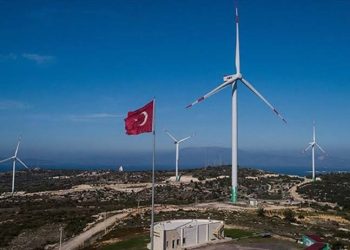
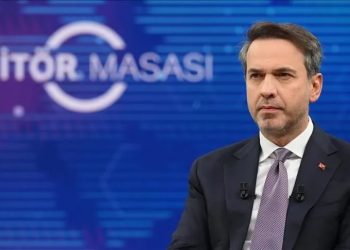
Turkey’s Minister of Energy and Natural Resources, Alparslan Bayraktar, announced that the country’s installed solar and wind energy capacity has exceeded 38,000 megawatts, equivalent to an investment of nearly $30 billion.
Speaking at the November ordinary meeting of the Istanbul Chamber of Industry (ISO), Bayraktar emphasized that Turkey is assessing the potential of domestic and renewable resources to meet its growing energy demand.
Highlighting Turkey’s economic growth over the past two decades, Bayraktar said: “The country’s economy has risen from $240 billion to $1.6 trillion, while exports have increased from $36 billion to $270 billion. This major success belongs to our industrialists.”
He added that Turkey’s energy needs have grown in parallel with its economy and that the country faces three fundamental challenges: rapidly increasing demand, dependence on foreign resources, and the need to combat climate change. According to Bayraktar, Turkey’s current electricity consumption of 350 terawatt-hours will surpass 1,050 terawatt-hours by 2050.

Bayraktar noted: “At COP29, our President announced Turkey’s target of reaching 120,000 megawatts of solar and wind capacity. So far, we have achieved 38,000 megawatts.” He added that to reach this goal, at least 8,000 to 9,000 megawatts must be added annually.
The Minister also described energy efficiency as “our cleanest and cheapest energy source” and explained: “Between 2017 and 2023, we invested $8.5 billion in energy efficiency, achieving a 14 percent improvement in primary energy consumption. Under the second National Energy Efficiency Action Plan for 2024–2030, a $20 billion investment is planned, which will deliver an additional 15 percent savings.”
In another part of his speech, Bayraktar referred to new oil and gas discoveries: “Today, the natural gas needs of about four million households are being met from the Black Sea. This figure will rise to 16–17 million households by 2028. In addition, the Gabar field currently produces 80,000 barrels of oil per day, with an annual economic value of around $2 billion.”

Bayraktar stressed that Turkey will continue its energy activities not only domestically but also in countries such as Libya, Iraq, Syria, Azerbaijan, Turkmenistan, and Kazakhstan.
He also underlined the importance of bringing mineral resources into the economy and localization in the mining sector: “Despite its rich mineral diversity, Turkey is a net importer. Our goal is to increase gold production from 30–40 tons to 100 tons and to become one of the world’s top five countries in supplying rare earth elements.”
Bayraktar concluded: “All our efforts in the energy sector aim to strengthen supply security. Turkey is moving beyond the perception of being a country with limited resources. With structural reforms starting in 2026, we will write a new success story.”
At the same meeting, Erdal Bahçıvan, Chairman of the Board of ISO, stated: “Energy security is a prerequisite for sustainable development. Transitioning to low-carbon energy is essential for playing a strong role in the global economy, and Turkey is among the few countries capable of achieving both goals.”