Ankara Between Tehran and Riyadh: Balancing Diplomacy or a Double-Game Strategy?
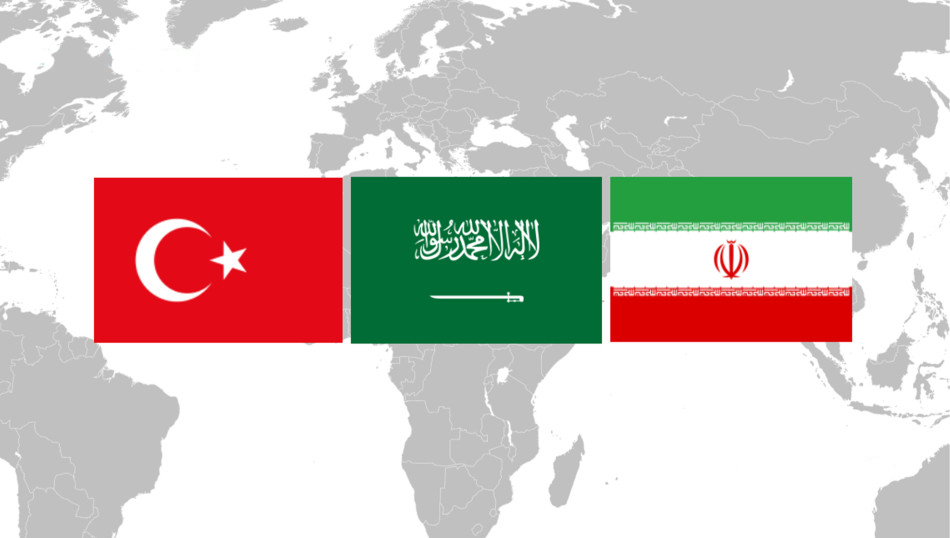
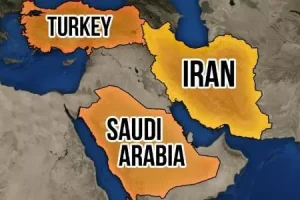
In the tense landscape of West Asia—where the geopolitical rivalry between Iran and Saudi Arabia has shaped many regional crises over the past two decades—Turkey has gradually emerged as an actor that is not only uninvolved in direct confrontation but also skillfully plays a balancing role between these two powers. Ankara’s multifaceted foreign policy in recent years demonstrates that Turkey does not seek overt intervention but rather aims to leverage tensions to enhance its strategic depth and build security-economic capabilities.
Since the early 2010s, Turkey’s regional policy toward Iran and Saudi Arabia has seen fluctuations. Issues such as Ankara’s support for Syrian opposition groups, competition in Iraq, and disagreements over Yemen have placed Turkey in a critical stance toward Tehran. Meanwhile, relations with Riyadh—particularly after the 2018 Jamal Khashoggi murder—faced significant strain. However, by adopting a new foreign policy approach post-2021, Turkey pursued a path of de-escalation and expanded economic-security cooperation with both sides.
Thus, over the past two years, Turkey has signed major defense deals with Saudi Arabia, including multi-billion-dollar agreements for exports of Akıncı drones, air defense systems, and technology transfer for the “KAAN” fighter jet. These moves have not only elevated Turkey’s defense industry but also ushered in a new phase of strategic cooperation with Riyadh. This partnership aligns with Ankara’s strategy to reduce pressure from the Arab bloc while increasing its influence in the region’s emerging security architecture.
Unlike its historically frosty ties with Riyadh, Ankara has maintained steady economic engagement and cooperation with Tehran in areas like transit, energy, and border security management. Although the two nations compete sharply in Syria and the South Caucasus, Turkey has avoided overt hostility, instead leveraging selective collaboration with Iran to mitigate regional pressures and bolster its own standing. Joint membership in the Economic Cooperation Organization (ECO) and shared dialogues on Afghanistan and Central Asia exemplify this tactical interplay.
Consequently, Turkey’s role in recent years has increasingly mirrored that of a “regional balancer.” Unlike powers that fuel rivalry through explicit partisanship, Ankara strives to maintain active ties with both rivals—positioning itself to exploit cooperative opportunities while becoming an effective mediator. Strategically, this balancing diplomacy has not only deepened Turkey’s regional influence but also positioned it as a potential broker in future conflicts.

In summary, Turkey’s diplomacy between Tehran and Riyadh reflects a shrewd, opportunity-driven equilibrium. This approach allows Ankara to expand its geopolitical clout amid regional polarization while retaining ties with both rivals. Though the sustainability of this policy hinges on Turkey’s domestic dynamics and the trajectory of regional rivalries, Ankara has so far succeeded in making multifaceted diplomacy a cornerstone of its Middle East strategy.