Examining the Anti-Israeli Approach of the Erdoğan Government
Erdoğan’s confrontation with Israel initially took shape in the form of threats and political and legal measures, but it soon extended into the economic sphere. Ankara placed the announcement of economic sanctions against Israel on its agenda—sanctions that have continued to this day, with signs of further escalation. The process of rising tensions in Ankara–Tel Aviv relations can be traced through various periods that outline the course of this confrontation.
Following the outbreak of the Gaza war in 2023, the Turkish government, led by Recep Tayyip Erdoğan, became one of Israel’s staunchest critics. Erdoğan, adopting a harsh stance, accused Israel of “genocide” and described Hamas not as a terrorist group but as a liberation force. These positions translated into concrete actions, including recalling Turkey’s ambassador from Tel Aviv, joining a legal complaint against Israel at the International Court of Justice in The Hague, and arresting individuals on Turkish soil on charges of spying for Israel.
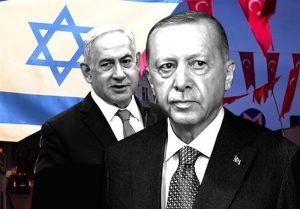
Erdoğan called Israel’s actions “crimes against humanity” and pledged to bring the issue of the regime’s nuclear weapons to the global agenda. Between January and April 2024, Turkey arrested dozens of people accused of spying for Israel against Hamas activists. Hakan Fidan accused Israel of seeking “more land, not security” and submitted evidence against it in The Hague. In March, Erdoğan accused Netanyahu of committing genocide with Western support, and Israel, in response, summoned the Turkish ambassador.
Subsequently, between April and May 2024, Ankara completely severed its trade relations with Israel, which had been worth $9.5 billion. The export of more than a thousand items—from cement and steel to automobile parts and electronic equipment—was halted. This decision led to shortages and price hikes in Israel’s domestic market, and Turkish companies refused to cooperate with their Israeli counterparts.
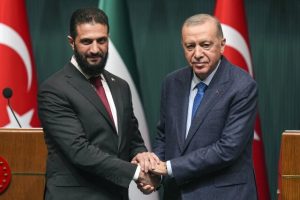
Turkey also closed its airspace to Israeli state aircraft and barred Israeli ships from docking at its ports. Even ships with Israeli ownership or bound for the occupied territories were denied entry to Turkish ports. These measures disrupted Israel’s trade routes and sent a clear message of Ankara’s political determination to exert comprehensive pressure.
On the regional front, from December 2024, after the fall of Bashar al-Assad’s government in Syria, the rivalry between Turkey and Israel entered a security phase. Israeli airstrikes on Turkey-linked positions in Syrian territory and Ankara’s prevention of Israel’s participation in NATO exercises showed that this confrontation had gone beyond the Gaza issue and reached a geopolitical level.
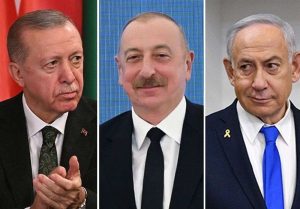
In the latest developments, Benjamin Netanyahu recognized the Armenian Genocide—an act Turkey described as “political hypocrisy.” At the same time, the Turkish parliament called for the suspension of Israel’s membership in the United Nations.
Over the past year, tensions between Turkey and Israel—especially after the clashes in Syria—have intensified. Given that 93% of the Turkish population holds a negative view of Israel, Erdoğan’s anti-Israeli policy has become part of Ankara’s regional strategy. While this strategy has not yet led to direct intervention in Gaza, it has heightened Tel Aviv’s concern over the possibility.