New Challenges for Turkey and Israel in Syria
With the fall of the Assad dynasty, which collapsed after years of rule due to exhaustion from civil war, battles against terrorist and extremist groups, severe economic crises, and mounting internal and external pressures, Syria’s political landscape has undergone a deep upheaval.
Although Hay’at Tahrir al-Sham (HTS) has ostensibly managed to impose a form of order in much of Syria, the ideological affiliations and history of extremism among many forces under Abu Muhammad al-Julani (now often referred to as Ahmed al-Shara’)—combined with their lack of governance experience—have cast significant uncertainty over Syria’s future. This has led most state and non-state actors to adopt a more cautious approach in dealing with Syria’s new rulers.
On the other hand, the collapse of Syria’s state institutions and the resulting power vacuum have intensified competition among regional and international actors, each pursuing their own interests in the new Syria. Global and regional players such as the U.S., Russia, Turkey, and Saudi Arabia are all seeking to define—or redefine—their roles in Syria. However, Turkey and the Zionist regime (Israel) have been particularly active since the early post-Assad days, advancing their agendas in Syria through different means.
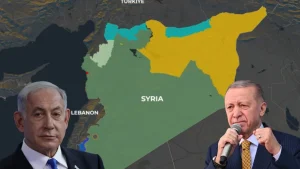
Turkey, by supporting Syria’s interim government and working to rebuild state and security institutions, aims to preserve Syria’s territorial integrity, prevent its fragmentation, establish safe zones for the voluntary return of Syrian refugees, and counter the threat posed by Kurdish groups.
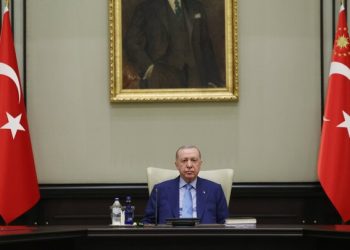
In the final decade of his rule, Bashar al-Assad viewed Turkey—which, alongside the West and some regional governments, sought regime change in Damascus—as a central source of threats. Later, as the Syrian army made gains in the civil war, Recep Tayyip Erdoğan called for a revival of bilateral relations and repeatedly expressed his willingness to meet with Assad, though Damascus’ refusal prevented any such encounter. It seemed Ankara had invested all its efforts in toppling the Assad regime—from funding jihadist factions to conducting cross-border operations and airstrikes in Syria under the pretext of targeting Kurdish forces.
Now, with HTS gaining strength in Damascus, Turkey appears to be consolidating its role in Syria’s new era, pushing its policies forward and seeking influence in its southern neighbor’s territory—partly to compensate for its setbacks over the past decade and partly to send a message to regional rivals.
Turkey was also the first country to reopen its embassy in Damascus, and its footprint is now clearly visible in every development in Syria. However, Turkey’s success depends on its ability to control northeastern Syria, where scattered groups affiliated with the U.S.-backed Syrian Democratic Forces (SDF) remain active. Additionally, Turkey is working to counter the resurgence of Iranian and Syrian influence while closely monitoring the evolving relations between Damascus and Saudi Arabia.
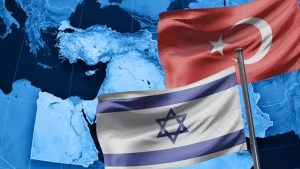
In contrast, the Zionist regime, alarmed by Turkey’s growing influence and the presence of jihadist factions in the new Syria, is pursuing a policy of weakening the central government and supporting decentralized structures. Through airstrikes on Syrian military positions and backing for local groups like the Druze, Tel Aviv seeks to create buffer zones and diminish the influence of Turkey and Iran in Syria.
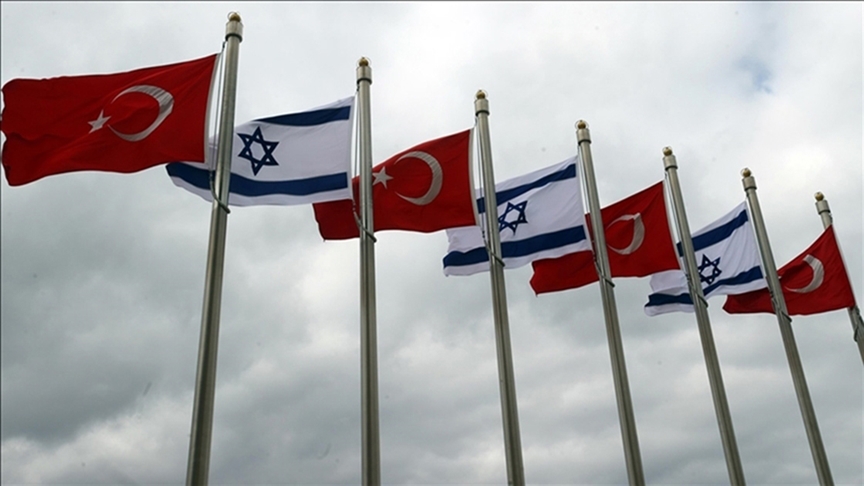
Although competition between these two actors is escalating, a direct military confrontation between the Zionist regime (a U.S. ally) and Turkey (a NATO member) remains unlikely. Their actions are better understood as mutual deterrence rather than steps toward war.
In this context, Washington, under Trump’s decision to significantly reduce U.S. troops in Syria, seeks to establish a relative balance in the region while keeping both Israel and Turkey content. For its part, Turkey is striving to strengthen the legitimacy of Syria’s interim government in Western forums—critical for lifting Western sanctions on Damascus and rebuilding Syria—while carefully maintaining diplomatic boundaries to demonstrate goodwill toward the Zionist regime and, by extension, secure Washington’s approval.