Presence of Turkish Aircraft in the Elit Firefighting Operation
The large-scale wildfire in the Elit forests of Chalus County was fully contained and brought under control after nine days of continuous efforts by rescue teams and executive bodies. Mehdi Yunusi Rostami, Governor of Mazandaran, announced that the operation was completed through 115 helicopter flights and 13 flights of the 40-ton Ilyushin aircraft.
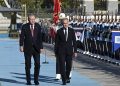
At noon today, in the final stages of extinguishing the fire, two aircraft and one specialized firefighting helicopter from the Government of Turkey, which had entered the country yesterday, began mop-up operations on the remaining hotspots. This specialized team was present in Iran at the request of the Government of the Islamic Republic of Iran and within the framework of cooperation between Turkey’s Ministry of Agriculture and Iran’s Department of Environment.
Earlier, a Turkish water-bombing aircraft with a capacity of about two tons had started mop-up operations in the Elit forests. At the same time, Iranian aircraft were also active in the area to prevent the fire from reigniting. The Turkish operational team had previously cooperated in controlling the Chalus forest fire.

Elyas Hazrati, Head of the Government Information Council, explained the details of the firefighting operation in a media statement. He noted that three wildfires had been recorded in the area over the past month: November 1, November 10, and November 15 (corresponding to 10 Aban, 19 Aban, and 24 Aban in the Iranian calendar). The third incident was more severe and extensive, and due to the rugged terrain and strong winds, the operation was more challenging.
According to Hazrati, following the outbreak of the fire, the Ministers of Interior and Agriculture Jihad, along with the Head of the Department of Environment, issued the necessary orders and specialized teams were dispatched to the site. The Minister of Defense played a key role by sending the Ilyushin aircraft and several helicopters, while the Minister of Foreign Affairs conducted diplomatic consultations to secure foreign assistance.
During the operation, more than 420 specialized rescuers from the Natural Resources Organization, the Environmental Protection Unit, the Iranian Red Crescent Society, and local organizations were present with various equipment. Two water-bombing aircraft with a capacity of 40 tons and eight helicopters also provided aerial support.
In its statement, the Government Information Council expressed gratitude to all rescuers, pilots, and personnel involved in the operation, and acknowledged the follow-ups by the President, the First Vice President, and relevant ministers. The statement also praised the cooperation of neighboring countries, especially Turkey, which dispatched two aircraft to assist. Media outlets and journalists were thanked for their swift and accurate reporting as well as constructive criticism, which contributed to identifying and addressing weaknesses during the crisis.