Scenario of Shifting Regional Balance in Favor of Saudi Arabia and Turkey Following a Strategic Blow to Iran
The recent attack by Israel on the capital of the Islamic Republic of Iran on June 12, 2024, was broader in terms of dimensions and military objectives compared to previous operations. One year earlier, in response to the assassination of a senior Iranian commander in Syria and Israel’s direct military attack on Iran in April 2024, the Islamic Republic carried out Operations “True Promise 1 and 2,” for the first time officially and directly targeting locations inside Israeli territory by launching missiles from Iranian soil. This trend, which has gradually evolved from “proxy warfare” to “direct confrontation,” has now entered a new phase of restructuring the balance of power in the Middle East, following Israel’s crossing of the red line of attacking the capital of a state possessing independent military capacity.

While the primary focus of analyses has largely concentrated on the nature of Iran’s response or the potential consequences of this confrontation in Tehran-Washington relations, this regional-level strategy has received less attention: Can this critical situation create a platform for Iran’s two regional rivals, namely Saudi Arabia and Turkey, to strengthen their geopolitical role and increase regional influence?
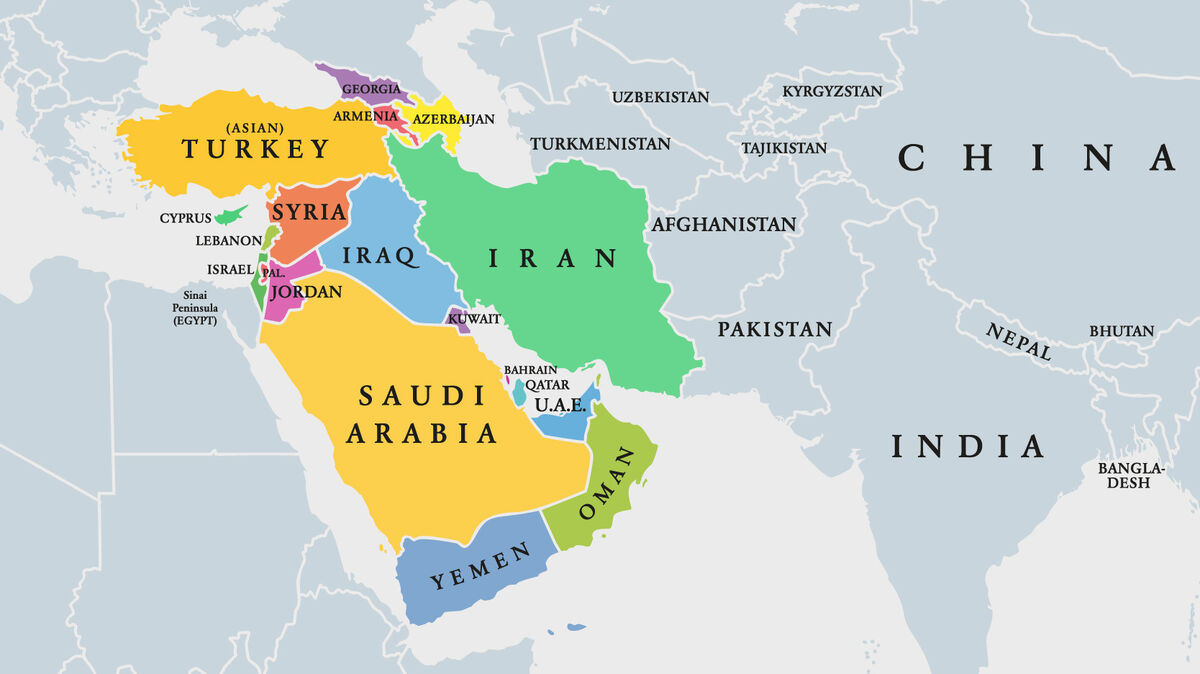
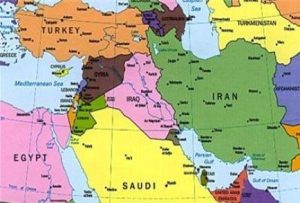
Prior to June 2024, the Middle East witnessed an informal tri-polar order among Iran in the interventionist and resistance axis, with broad influence in the Levant and Yemen; Saudi Arabia as a conservative financial-political actor; and Turkey in the role of a pragmatic power. This triangle, though not confrontational, played a role in geopolitical competitions from Iraq to the Red Sea. But now, with the assassination or elimination of Iran’s proxy leaders in Lebanon and Palestine, the fall of Bashar al-Assad’s government, the gradual withdrawal of Iranian forces from Syria, and increasing domestic pressures, Tehran has lost some of its traditional tools of regional influence. In other words, a power vacuum is forming that Riyadh and Ankara are ready to fill.
Saudi Arabia now finds itself in a position where it can unilaterally or multilaterally redesign security initiatives in the Persian Gulf. The reduction of Iran’s role in Yemen, withdrawal from Syria, and diminishment of proxy activities in Iraq and Lebanon have created a golden opportunity for Riyadh to consolidate Sunni-Arab security leadership—all without needing a formal alliance or costly normalization with Israel. In this vein, Saudi Arabia alongside the UAE can transform anti-Iran structures into sustainable security frameworks that may perhaps take institutional form in the not-too-distant future.
On the other side, Turkey also has a high chance of consolidating its influence in Syria, northern Iraq, and even the Mediterranean coast under the shadow of Iran’s absence in the northern Levant. Ankara strives to introduce itself as the only active, stable, and balancing Sunni power in the region—a position strengthened by aerial power projection, border clashes, and role-playing in the Libya and Caucasus dossiers. Turkey now has the possibility to upgrade its security policy from “limited balancing” to “regional crisis management,” especially if Iran’s structural vacuum persists. Meanwhile, the likelihood of tactical convergence between Turkey and Saudi Arabia has also increased. Although these two countries have deep-rooted differences in ideological domains (such as Wahhabism vs. Muslim Brotherhood differences) and symbolic rivalries, common interests in managing the post-Iran conditions will drive them toward temporary cooperation based on a division of labor: financial and diplomatic provision by Saudi Arabia and logistical and security provision by Turkey.
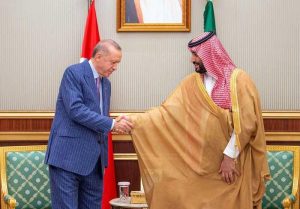
Of course, the full realization of this scenario faces obstacles, including the Islamic Republic of Iran’s counter-reaction, which will likely respond to these efforts with indirect and asymmetric tools (such as cyberattacks, disruption of straits, or reactivation of regional groups); and second, the lack of strategic consensus between Riyadh and Ankara, who have always had a soft competition in managing Sunni leadership with each other; and finally, the absence of effective will from major powers (whether the U.S., Russia, or China) to define or support a new regional security order.
In summary, the developments following Israel’s direct attack on the capital of the Islamic Republic of Iran in June 2025 mark a turning point in the Middle East’s security equations. Unlike previous confrontations, which mostly remained in the form of proxy wars or limited operations, crossing the red line of attacking Tehran has had not only psychological and military consequences but also profound geopolitical repercussions. Its most significant manifestation is the beginning of a redistribution of geopolitical opportunities among regional actors such as Saudi Arabia and Turkey, who are striving to fill the vacuum resulting from Iran’s reduced role. In such circumstances, Iran faces a complex scenario; a scenario that, if the trend of erosion of national and regional power resources continues, could lead to a shift in the balance to Iran’s detriment. But this is not a definite path. The proposed strategic scenario for the Islamic Republic of Iran must focus on several deterrence-oriented and power-restoring regional pillars.
First, instead of reproducing classical “Axis of Resistance” patterns, it must restructure its regional influence tools in the form of a “decentralized, flexible, and technology-driven network” and replace costly physical presence with investment in cognitive warfare, cybersecurity, energy security, and limited smart proxy interventions.
Second, it must use overt and covert diplomatic tools to create tactical divisions between Saudi Arabia and Turkey. Strengthening economic engagement with Ankara, exploiting ideological contradictions (Wahhabism / Muslim Brotherhood-ism), and leveraging Turkey’s concerns about Saudi assertiveness can weaken the possibility of a cohesive bloc forming against Iran.
Finally, restoring regional power is impossible without social stability, economic sustainability, and internal political cohesion. Any strategic deterrence by Iran in the region ultimately depends on its domestic agency. Therefore, strengthening social capital, increasing economic resilience, and reducing domestic friction must be considered part of the Islamic Republic’s new regional security doctrine.
Thus, although the recent blow to Iran’s regional standing has created opportunities for regional rivals in the short term, by adopting a smart strategy, this threat can be transformed into a platform for redefining influence tools, rebuilding deterrence, and readjusting the regional balance. The upcoming scenario is not necessarily to Iran’s detriment but will depend on the nature and timing of Tehran’s strategic response.